
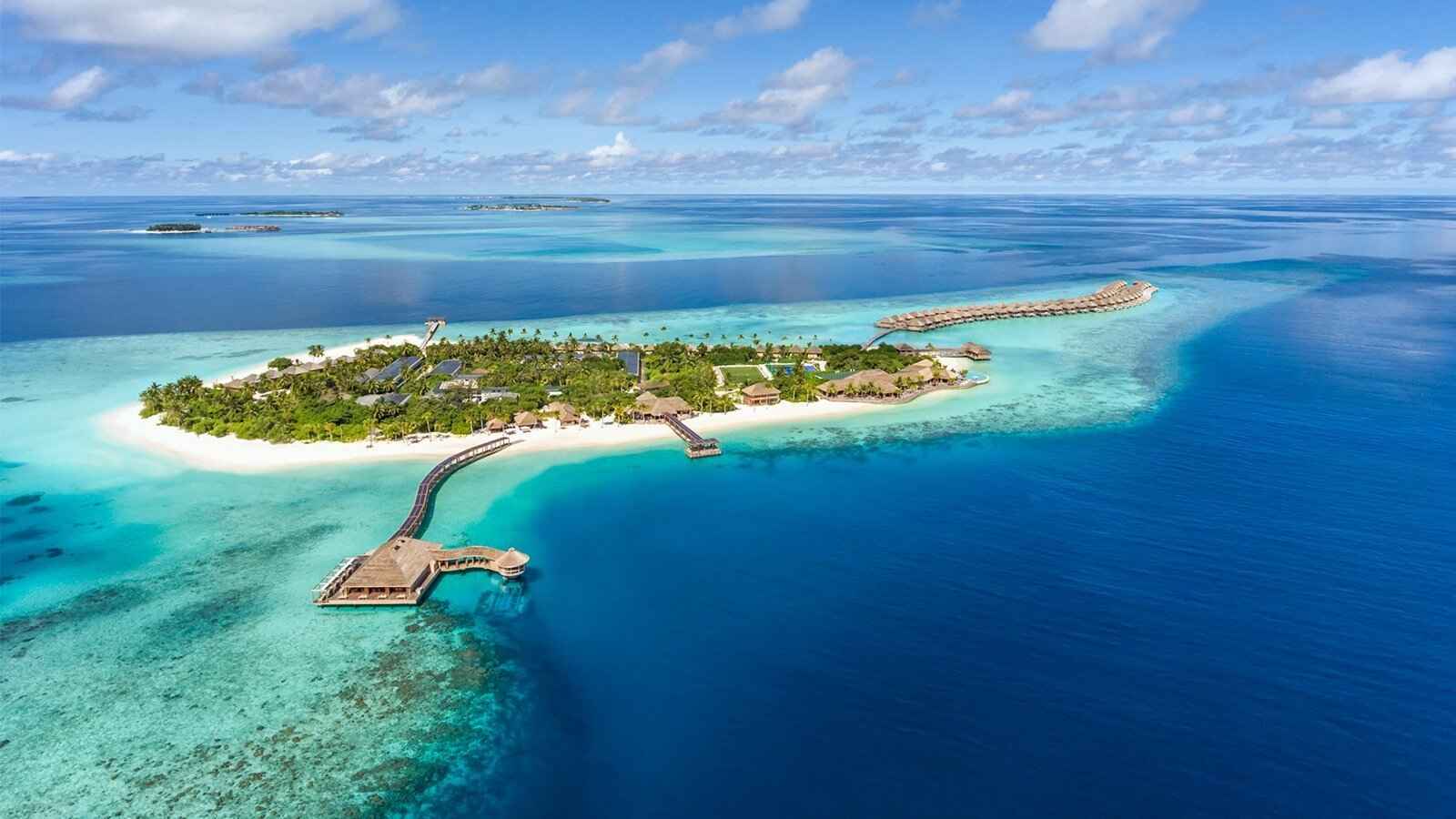
Lhaviyani Atoll - Where the Diving Is Exceptional and the Crowds Are Not
Lhaviyani Atoll officially known as Faadhippolhu Atoll sits in the northern Maldives between Noonu Atoll to the south and Shaviyani Atoll to the north. It is not the first atoll most Maldives travellers visit. It is not the most photographed or the most marketed. But among the diving community it has a specific and well-earned reputation: Lhaviyani has some of the finest drift diving in the Maldives, sites that are less trafficked than the central atoll equivalents, and reef health that reflects the lower boat traffic and tourist density of the northern archipelago.
For travellers whose priorities run toward underwater quality over proximity to the airport, Lhaviyani consistently delivers.
The Geography
Lhaviyani Atoll comprises 54 islands, of which only four are inhabited Naifaru (the atoll capital), Hinnavaru, Kurendhoo, and Olhuvelifushi. The remaining islands are uninhabited reef islands, sandbanks, and resort developments. The population of approximately 12,000 Maldivians lives primarily on Naifaru and Hinnavaru, where fishing and tourism-related employment are the primary industries.
Naifaru island is worth a visit for guests interested in traditional Maldivian boat building the island has a working boat yard where skilled craftsmen continue to build traditional wooden dhonis using inherited techniques. Observing the construction process the shaping of the curved bow, the joinery of the hull planks gives context to the seafaring culture that defines the Maldivian relationship with the Indian Ocean.
The atoll's lagoon is noted for its water clarity. Seagrass beds across the atoll support healthy populations of green sea turtles, which graze in the shallow areas and are regularly encountered by snorkellers from the resort beaches.
Diving in Lhaviyani Atoll
Lhaviyani Atoll's dive reputation rests primarily on two sites Kuredu Express and the Shipyard both of which attract divers specifically for what they deliver rather than simply for their proximity to a resort.
Kuredu Express is a channel dive a kandu where strong tidal currents draw grey reef sharks in schools that regularly number 20 to 30 individuals holding position in the current. The channel walls are covered in pristine hard coral formations with resident Napoleon wrasse, schools of fusiliers, and regular eagle ray sightings. The depth range of 5 to 30 metres makes the site accessible at Open Water certification level in moderate current conditions, though good buoyancy control and drift diving experience improve the encounter quality significantly.
The Shipyard is one of the most distinctive dive sites in the Maldives two shipwrecks resting on the sandy bottom at recreational diving depth, now comprehensively colonised by coral growth and marine life. Schools of batfish hang around the superstructure. Moray eels occupy the crevices. The visual complexity of a healthy wreck site combined with the Lhaviyani Atoll water clarity produces underwater photography conditions that attract dedicated photographers to the site repeatedly.
Fushivaru Thila is a submerged pinnacle site with consistent reef shark sightings, good coral coverage, and a depth range accessible to most certified divers.
Beyond these headline sites, the wider atoll channel and reef diving is consistently good the reduced boat traffic compared to North and South Male Atoll means sites here are less frequently visited and maintain correspondingly better reef health.
| Dive Site | Type | Key Encounters | Certification | Current Level |
|---|---|---|---|---|
| Kuredu Express | Kandu Channel | 20-30 grey reef sharks | Open Water+ | Moderate-Strong |
| Shipyard | Wrecks | Batfish schools, morays, coral | Open Water | Light |
| Fushivaru Thila | Pinnacle | Reef sharks, turtles, eagle rays | Open Water | Moderate |
Snorkelling in Lhaviyani Atoll
The clear, warm lagoon water and the healthy reef systems of Lhaviyani Atoll produce snorkelling conditions that are among the better in the northern Maldives. Sea turtles are abundant on the seagrass beds. House reefs at the atoll's resorts particularly Kuredu Island Resort provide productive direct-access snorkelling with regular reef shark, turtle, and eagle ray encounters.
Getting to Lhaviyani Atoll
The standard transfer from Velana International Airport to Lhaviyani Atoll resorts is by seaplane approximately 35 to 40 minutes. The seaplane operates daylight hours only, with the luggage weight limit of approximately 20kg per person applying to all seaplane transfers.
An alternative transfer route uses the domestic flight from Velana to Hanimaadhoo Airport in Haa Dhaalu Atoll, followed by a 60 to 90-minute speedboat to the resort. Total journey time by this route is three to four hours but avoids the seaplane daylight restriction and is sometimes more cost-effective.
Best Resorts in Lhaviyani Atoll
Hurawalhi Island Resort is the most celebrated property in Lhaviyani Atoll a luxury resort with overwater villas, an adults-only positioning, and the 5.8 Undersea Restaurant one of the deepest underwater restaurants in the world, operating six metres below the surface. The restaurant seats 14 guests and the reef visible through the glass changes with the tide throughout the meal.
Kuredu Island Resort is the largest resort in Lhaviyani Atoll and one of the most comprehensive activity-focused properties in the northern Maldives. The dive centre at Kuredu is one of the most productive in the atoll site coverage includes Kuredu Express, the Shipyard, and Fushivaru Thila within easy boat range. The resort suits families, diving groups, and active guests as well as couples.
Fushifaru Maldives is a smaller, more intimate property in Lhaviyani Atoll with overwater villa categories, a good house reef, and a focused service approach that the larger properties cannot match at scale. The resort's sustainability credentials coral restoration, marine conservation participation are among the more developed of any Lhaviyani Atoll property.
Kanuhura Maldives is a luxury resort in the northern part of the atoll with beach and overwater accommodation, three private sandbanks, and a diving programme with access to the atoll's best sites. The three-sandbank access gives Kanuhura one of the strongest sunset and excursion offering of any Lhaviyani property.
Atmosphere Kanifushi operates a comprehensive all-inclusive programme in Lhaviyani Atoll that covers dining, drinks, water sports, and a range of activities within the package price. For guests who want all-inclusive simplicity in the northern Maldives at a mid-range price point, Atmosphere Kanifushi is the most consistent recommendation.