Baa Atoll The Maldives Only UNESCO Biosphere Reserve
Most atolls in the Maldives are chosen for the resort on them. Baa Atoll is chosen for what lives in it.
In June 2011, Baa Atoll became the Maldives' first and only UNESCO Biosphere Reserve a designation that reflects the extraordinary marine biodiversity of its waters rather than any administrative achievement. The atoll contains 250 species of coral and over 1,200 species of fish. Its reefs support some of the largest concentrations of manta rays, whale sharks, sea turtles, and reef shark populations in the Indian Ocean. And at its southeastern edge sits Hanifaru Bay — a small body of water where one of the most spectacular wildlife gatherings on the planet occurs every year between May and November.
For travellers whose Maldives trip is defined by a desire to encounter marine wildlife on a meaningful scale, Baa Atoll is the specific destination the rest of the country cannot match.
The Geography
Baa Atoll is located northwest of Malé, separated from the central atolls by the broad waters of the Kandiva Channel. The atoll covers approximately 1,200 square kilometres of ocean and comprises 75 islands — of which 13 are inhabited, home to around 11,000 Maldivians, and the remainder uninhabited reef islands, sandbanks, and resort developments.
The inhabited islands of Baa Atoll maintain a traditional fishing community character that has developed alongside rather than in spite of the tourism sector. Thulhaadhoo island is particularly noted for its lacquerwork traditional Maldivian craft objects decorated with bold geometric patterns in red, black, yellow, and green. The last remaining lacquerware artisan families in the Maldives are based here, and the craft is still practised in its original form on this island.
Dharavandhoo island serves as the atoll's domestic aviation hub, with Dharavandhoo Airport (DRV) providing the domestic flight connection from Velana International Airport as an alternative to the seaplane transfer.
Hanifaru Bay - Why People Come to Baa Atoll
Hanifaru Bay sits at the southeastern edge of Baa Atoll and covers barely more than a football field in surface area. What happens inside it between May and November is, by any measure, one of the most extraordinary natural phenomena accessible to visitors anywhere in the ocean.
The southwest monsoon pushes plankton-rich water into the bay in concentrations that draw manta rays and during peak periods, whale sharks in numbers that are genuinely extraordinary. Up to 200 manta rays have been recorded in the bay in a single session. They arrive to feed on the concentrated plankton, circling and barrel-rolling through the current in formations that marine biologists travel specifically to study. The Manta Trust research programme, which has catalogued individual manta rays in the Maldives for decades, uses Hanifaru Bay as its primary research site.
Hanifaru Bay is protected by strict visitor regulations only snorkelling is permitted, no scuba diving. A fee of USD 30 per person per entry applies, with proceeds going directly to the Baa Atoll Conservation Fund. Visitor numbers per session are capped to protect the aggregation. Resorts in Baa Atoll book session slots in advance confirming your slot before arrival rather than on the day is strongly recommended during peak season.
The peak manta aggregation months are June through September. May and October are transitional fewer mantas than peak months but also fewer visitors. Outside the May to November window, mantas are present in smaller numbers but the bay is no longer the feeding aggregation site it becomes during the monsoon season.
Hanifaru Bay Quick Facts
| Factor | Details |
|---|---|
| Peak Season | Jun-Sep (up to 200 mantas) |
| Shoulder | May/Oct (fewer mantas, fewer crowds) |
| Access | Snorkel only (no scuba) |
| Entry Fee | $30/person (Baa Conservation Fund) |
| Group Limit | 10 snorkelers/guide max |
| Booking | Resorts book slots (3-6 months ahead) |
Marine Life Beyond Hanifaru
The wider Baa Atoll marine environment reflects the UNESCO protection status in the condition of its reefs and the density of marine life throughout. Dive sites across the atoll particularly the channel dives and thila sites are in consistently better health than comparable sites in the more heavily trafficked central atolls near Malé.
Sea turtles both hawksbill and green turtle species are abundant throughout Baa Atoll waters. Reef sharks are regular sightings on most dives and snorkels. Eagle rays, Napoleon wrasse, and dense schools of reef fish populate the coral formations around both resort islands and uninhabited reef systems. The house reefs at the Baa Atoll resorts benefit from the same protected marine environment that makes the wider atoll exceptional.
Getting to Baa Atoll
The standard transfer from Velana International Airport to Baa Atoll resorts is by seaplane approximately 25 to 35 minutes depending on the specific island. The seaplane operates daylight hours only. International flights arriving at Malé after approximately 3pm may not connect to the seaplane the same day, requiring an overnight in Malé or Hulhumale before continuing the following morning.
An alternative transfer is available via Dharavandhoo Airport a domestic flight from Velana (approximately 30 minutes) followed by a speedboat to the resort. This route avoids the seaplane daylight restriction and the seaplane luggage weight limits, and is sometimes more cost-effective for guests travelling to resorts in the eastern part of the atoll. Total journey time by domestic flight plus speedboat is typically two to three hours.
Baa Atoll Transfer Options
Best Resorts in Baa Atoll
Anantara Kihavah Maldives Villas combines overwater villa luxury with the strongest resort programme in the atoll an underwater restaurant, overwater spa, wine cellar, and telescope observatory alongside direct Hanifaru Bay excursion access.
Four Seasons Landaa Giravaaru is the most established luxury property in Baa Atoll with an extensive marine research programme, multiple villa categories, and one of the most comprehensive diving operations in the atoll.
Milaidhoo Island Maldives is a boutique property with a small guest count, exceptional villa quality, and a service philosophy built around personalisation. The Hanifaru Bay access and the quality of the surrounding house reef make it one of the strongest boutique recommendations in the country.
Soneva Fushi is one of the most distinctive resort environments in the Maldives dense vegetation, barefoot-luxury philosophy, large private villa spaces, and a spa and organic garden programme of genuine depth.
Vakkaru Maldives delivers overwater suite quality with butler service as standard, an adults-only pool zone, and a Baa Atoll lagoon of exceptional colour and clarity.
Finolhu Baa Atoll brings a beach club energy to the atoll with a more social atmosphere, strong water sports programme, and Hanifaru Bay access during the manta season.
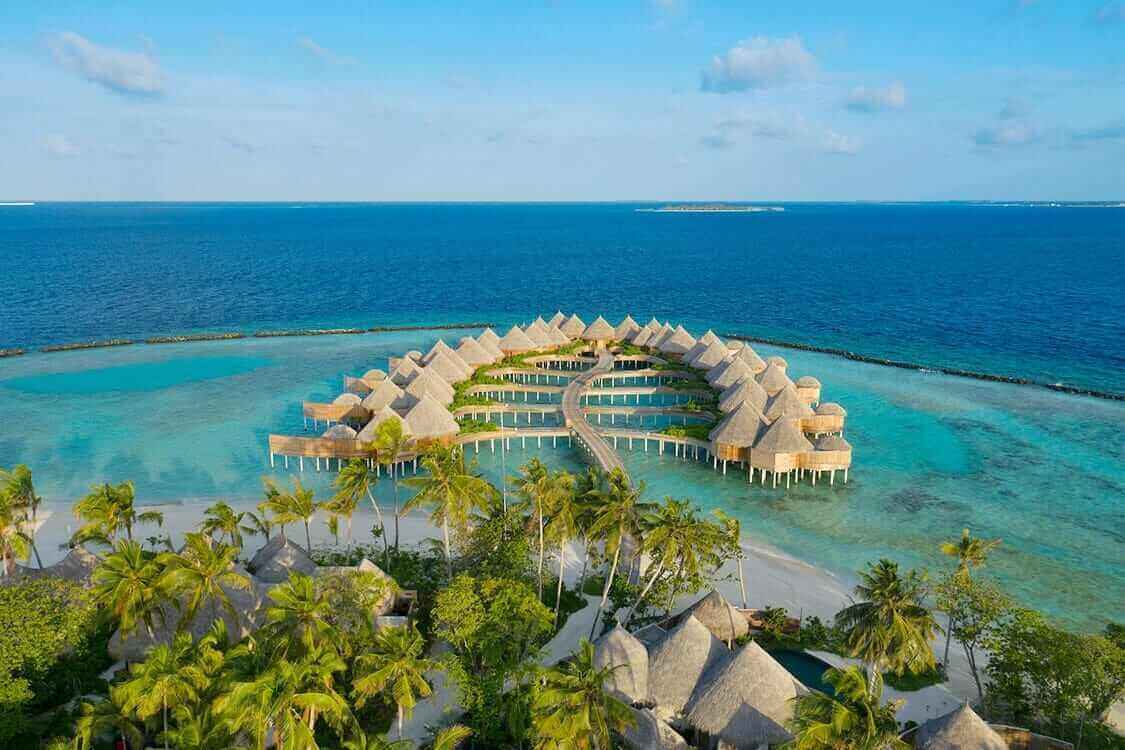
The Nautilus Maldives operates as a private house rental rather than a conventional resort 26 private houses, no fixed menus or schedules, a Relais & Châteaux member property with the most intimate service ratio in the atoll.
Local Islands Worth Visiting
Eydhafushi is the capital island of Baa Atoll and the largest inhabited island in the atoll. It has a lively local market, traditional fishing community character, and a public ferry connection to other inhabited islands. Dharavandhoo has developed as a guesthouse hub for budget travellers seeking Hanifaru Bay access without resort pricing. Thulhaadhoo is worth a visit specifically for the lacquerwork craft tradition watching the artisans work the lathe and apply the coloured lacquer layers is one of the most specific cultural experiences available from any Maldivian atoll day trip.
Compare Live Rates & Exclusive Deals
Compare Live Rates & Exclusive Deals
Featured Hotels & Guides in this Collection (1)