Scuba Diving in the Maldives - A Complete Guide for Every Level
The Maldives is not simply a good diving destination. It is one of the defining diving destinations on earth a place that serious underwater travellers plan trips around specifically, that divers return to repeatedly across different atolls and different seasons, and that produces encounters with marine life that are simply not available at most other dive locations.
Understanding why requires understanding the geography. The Maldivian atolls are essentially reef rings enclosing lagoons, connected to the open ocean through channels called kandus. Tidal movement pushes nutrient-rich water through these channels twice daily, feeding the reef ecosystems and attracting the pelagic species mantas, whale sharks, hammerheads, grey reef sharks that define diving in the Maldives. The quality and diversity of what happens in these channels is what separates Maldivian diving from almost every other tropical reef destination.
What Makes Maldives Diving Exceptional
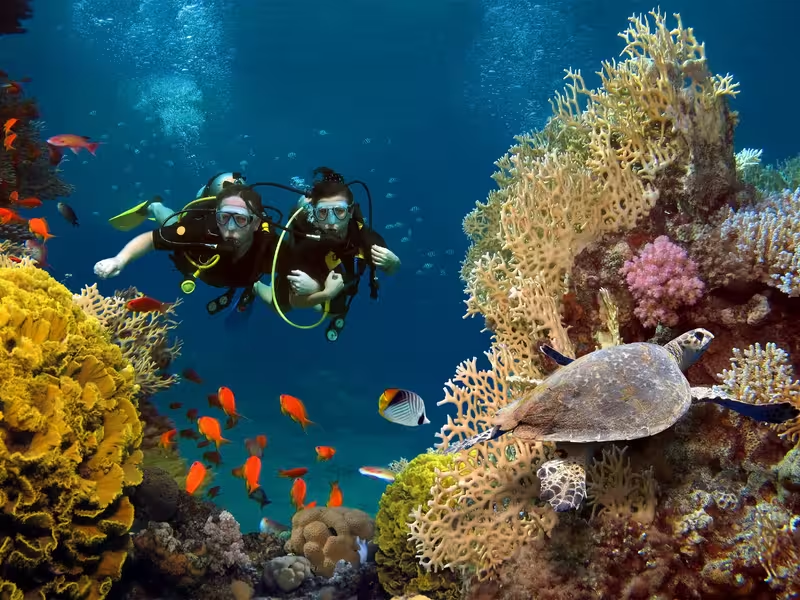
The kandu drift dive is the signature Maldivian dive experience. A kandu is a channel between two reef systems where the tidal current runs sometimes gently, sometimes powerfully. Divers enter the current and drift through the channel, watching the marine life gather on the reef walls to feed on the passing nutrients. Grey reef sharks hold position in the current. Eagle rays coast past at eye level. Schools of fusiliers hang in dense formations above the reef. At the right site, at the right current stage, a kandu drift dive is one of the most visually impressive dive experiences available anywhere.
Thilas underwater pinnacles rising from the sandy bottom are another defining feature of Maldivian diving. Thilas are covered in soft coral and hard coral formations and surrounded by concentrations of marine life. The most celebrated, Maaya Thila in North Ari Atoll, is considered one of the finest dive sites in the Indian Ocean.
Marine megafauna access is more reliable in the Maldives than almost anywhere else. Manta rays at Hanifaru Bay, whale sharks in South Ari Atoll, hammerhead sharks at Rasdhoo Atoll, tiger sharks at Fuvahmulah these encounters are specific to particular sites and seasons but they are predictable enough to plan around.
Dive Sites by Atoll
North and South Male Atoll hold the most accessible dive sites from the airport. Banana Reef one of the most dived sites in the country is a 300-metre reef formation in North Male Atoll with excellent coral coverage and abundant fish life. HP Reef, also known as Rainbow Reef, is a deeper pinnacle site with strong currents that attract sharks and rays. Manta Point in South Male Atoll is a cleaning station where reef manta rays gather to have parasites removed by cleaner fish an encounter that is quietly extraordinary for the intimacy of the behaviour.
Ari Atoll is the whale shark atoll. The resident population in South Ari Atoll produces year-round encounters at sites throughout the area. Maaya Thila in North Ari Atoll is the benchmark site for coral coverage and marine life density in the central Maldives.
Baa Atoll contains Hanifaru Bay a snorkelling-only site protected within the UNESCO Biosphere Reserve where manta rays and occasionally whale sharks gather during the southwest monsoon season. The surrounding atoll dive sites benefit from the same nutrient-rich conditions that drive the Hanifaru aggregations.
Vaavu Atoll specifically Miyaru Kandu, known as Shark Channel concentrates grey reef sharks, whitetip reef sharks, and occasionally hammerheads in the channel current. It is one of the most reliable shark dive sites in the Maldives.
Fuvahmulah is the advanced diver destination. Tiger sharks are present year-round in the waters around this single-island atoll. Thresher sharks, oceanic manta rays, and hammerheads are also found here. The currents are strong and the depths significant this is not beginner diving.
Northern Atolls Raa, Noonu, Haa Alif, Haa Dhaalu are the least visited and most pristine dive environments in the country. The reef health here exceeds that of the central atolls and the marine life density reflects the lower boat traffic and the protected nature of the furthest northern reefs.
| Atoll | Signature Site | Best For | Accessibility |
|---|---|---|---|
| North Malé | Banana Reef | Beginners, accessibility | Speedboat |
| South Ari | Whale shark sites | Year-round megafauna | Seaplane |
| Baa | Hanifaru Bay (snorkel) | Manta aggregation Jun-Oct | Seaplane |
| Vaavu | Miyaru Kandu | Shark channel | Speedboat |
| Fuvahmulah | Tiger shark sites | Advanced predators | Domestic flight |
Certification Levels and What They Access
Open Water certified divers can access most standard Maldivian dive sites up to 18 metres. The majority of the most celebrated sites including Maaya Thila, Banana Reef, and most kandu drift dives are accessible at this level in appropriate current conditions.
Advanced Open Water certification is recommended for drift diving in stronger currents, for deeper thila sites, and for the better-known pelagic encounter sites. The Advanced Open Water course is available at most resort dive centres in the Maldives and takes two to three days.
Rescue Diver and above is required by some operators for the strongest current sites and for the more challenging Fuvahmulah sites. Divers with rescue-level training or above have access to the full range of Maldivian dive experiences.
Non-certified beginners can access the Maldives through resort Discover Scuba Diving programmes introductory dives under direct instructor supervision to a maximum of 12 metres. Most resort dive centres offer this daily and it gives non-certified guests a genuine first scuba experience in Maldivian water.
Best Dive Resorts in the Maldives
Resort dive centre quality varies significantly. The factors that separate a strong dive operation from an average one are the experience level of the dive guides, the condition of the equipment, the daily dive frequency possible, and the site coverage available from the resort's location.
Bandos Maldives has operated one of the longest-running dive programmes in the country with extensive North Male Atoll site coverage. Huvafen Fushi delivers exceptional guide quality in a boutique resort context. COMO Maalifushi in Thaa Atoll gives access to uncrowded sites in excellent condition. W Maldives offers whale shark diving from the resort in North Ari Atoll. Fuvahmulah Dive School is the specialist operator for tiger shark encounters.
Diving Costs in the Maldives
Dive centre pricing at Maldivian resorts is typically USD 80 to USD 120 per single boat dive, with package pricing reducing the per-dive cost for guests planning multiple dives daily. All-inclusive resorts that include diving Kudadoo, Atmosphere Kanifushi represent the most cost-effective way to dive frequently. The round-trip seaplane transfer cost to distant atoll resorts should be factored into the total diving trip cost, not just the per-dive rate.