
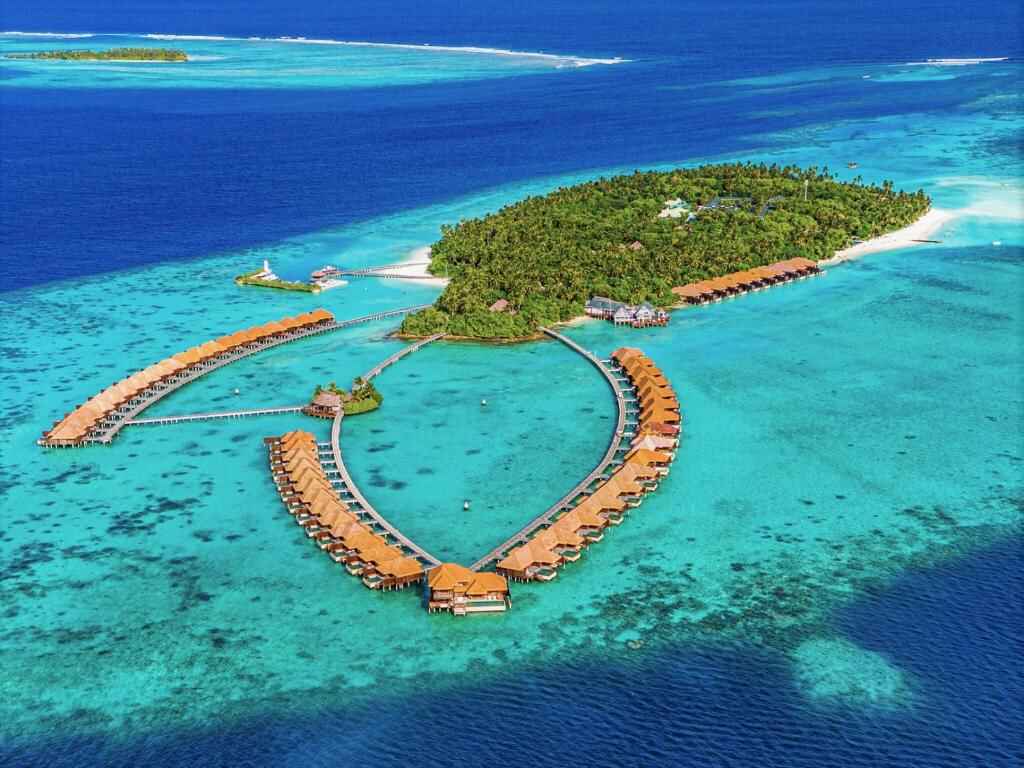
Gaafu Atoll - The Maldives Largest Lagoon and Its Best-Kept Diving Secret
Gaafu Atoll is the collective name covering two administrative atolls Gaafu Alifu (North Huvadhu) and Gaafu Dhaalu (South Huvadhu) that together form the single largest atoll in the Maldives. Huvadhu, as it is historically known, is an extraordinary piece of ocean geography: a lagoon enclosed within a reef ring that measures approximately 2,500 square kilometres — one of the largest natural lagoons in the world.
The atoll sits in the deep south of the Maldives, separated from the central atolls by the One and a Half Degree Channel a broad expanse of open ocean that creates both the logistical challenge of reaching Gaafu and the geological conditions that produce some of the finest reef diving in the country.
Why the Channel Makes Gaafu Different
The One and a Half Degree Channel between the central and southern Maldivian atolls is not merely a geographic boundary. It is an oceanographic feature. The deep, open water of the channel funnels Indian Ocean currents through the southern atoll systems with more force and more nutrient richness than the currents that reach the northern atolls. This produces reef ecosystems that are healthier, more productive, and more diverse than comparable sites in the more visited parts of the country.
The dive sites of Gaafu Atoll benefit directly from these currents. Grey reef sharks, eagle rays, manta rays, and large pelagic species move through the channel systems in concentrations that approach what divers find at the most celebrated Indian Ocean reef destinations globally. And they do it in an environment where very few other dive boats are present.
The reef health here coral coverage, fish population density, visibility consistently exceeds what divers who have experienced the central atolls expect. The lower tourist density is the direct cause. Gaafu Atoll receives a fraction of the dive traffic that Maaya Thila, Miyaru Kandu, or the North Male Atoll sites encounter on a typical day.
Gaafu Atoll Dive Site Matrix
The Islands
Gaafu Alifu Atoll has Vilingili as its capital island a compact inhabited community with a local guesthouse sector for independent travellers seeking access to the Huvadhu reef without a resort stay. Kooddoo Airport (IATA: GKK) serves Gaafu Alifu Atoll with domestic flights from Velana International Airport, providing the primary air access point for the northern section of the Gaafu complex.
Gaafu Dhaalu Atoll has Thinadhoo as its capital the largest inhabited island in the southern Maldives outside of Addu City. Kaadedhdhoo Airport (IATA: KDO) serves the atoll with domestic connections from Male.
The atoll has significant inhabited island communities with traditional fishing economies that are almost entirely separate from the international tourism circuit. Local markets, working dhoni fleets, and the everyday rhythm of Maldivian community life in the south are accessible and visible to travellers who stay on local islands rather than resort properties.
Diving in Gaafu Atoll
The dive sites of Gaafu Atoll are explored primarily by southern Maldives liveaboard itineraries, which move through the channel systems and reef environments over seven to ten days. Fixed resort diving is available at the handful of properties operating in the atoll, with boat access to a range of nearby sites.
The channel dives where the One and a Half Degree Channel meets the Huvadhu reef systems produce conditions comparable to the best kandu diving in the country. Grey reef sharks hold position in the current. Eagle rays coast past the reef walls. The soft coral coverage on the deeper reef faces is in better condition than most central atoll equivalents. Night diving in the calmer lagoon-side sites reveals hunting reef sharks, octopus, and the full activity of a healthy tropical reef in darkness.
Getting to Gaafu Atoll
Gaafu Alifu Atoll is reached by domestic flight from Velana International Airport to Kooddoo Airport approximately 60 to 75 minutes. Gaafu Dhaalu is served by Kaadedhdhoo Airport on a similar domestic route. Total journey time from the international airport to a resort or guesthouse in the atoll is typically three to four hours including the speedboat connection.
Public ferry services from Male to the southern atolls operate on a scheduled basis and take considerably longer a multi-day journey for the most southern islands but at a cost that makes the trip viable for budget travellers with time flexibility.
Gaafu Atoll vs Southern Competitors
Resort Options
The resort sector in Gaafu Atoll is limited compared to the central atolls a reflection of the logistical remoteness rather than any shortcoming of the destination. The few properties that operate here attract guests specifically for the marine environment and the relative quiet. Guesthouses on inhabited local islands give independent travellers access to the atoll at budget prices, and the local island diving operators provide site access comparable to what the resort dive centres offer.