
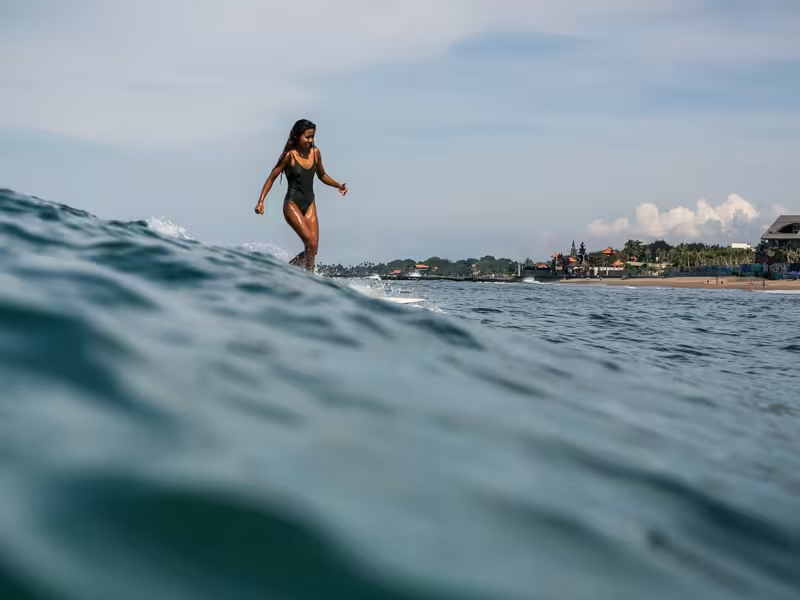
Surfing in the Maldives - Reef Breaks, Surf Season and Where to Go
The Maldives is not the first destination most surfers think of. The Maldives is where honeymooners go. Where people with overwater villas and dolphin cruises and underwater restaurants go. Surfers go to Indonesia, to Portugal, to Hawaii.
And yet the Maldives has some of the finest reef breaks in the Indian Ocean, a genuine surf season that delivers consistent swell for six months of the year, and crucially the ability to combine world-class waves with the kind of tropical island environment that no other major surf destination provides. Surfing a left-hand reef break with the Indian Ocean visible in every direction and nobody else in the water is a specific combination that the Maldives delivers more completely than most destinations that compete for the surf travel market.
Maldives Surf Season
The surf season in the Maldives aligns with the southwest monsoon broadly May through October. This is also the wet season, which means more cloud cover and occasional rain, but the swell consistency and quality during these months is significantly higher than the dry season. The dry season from November through April produces occasional surf but the swells are less consistent and the waves generally smaller.
June and July typically deliver the largest and most consistent swell. August and September maintain good consistency with slightly smaller wave size. October marks the transition out of the surf season but can deliver excellent days, particularly in the northern part of the swell window. May is the opening of the season less consistent than mid-season but with the advantage of fewer visiting surfers.
The Surf Breaks
North Male Atoll holds the most accessible surf breaks in the Maldives. The famous left-handers and right-handers near the central atolls Cokes, Chickens, Sultans, Lohis, and Pasta Point are within boat range of resorts and surf camps in the area.
Cokes is the premier break of North Male Atoll a hollow, fast left-hander over a shallow reef that produces some of the best waves in the Maldives on a solid swell. It is not a beginner wave. The reef is shallow, the barrel is fast, and wipeouts are consequential. For experienced surfers, Cokes at its best is as good as the Indian Ocean gets in this region.
Chickens is the more forgiving version a longer, more workable left-hander that produces excellent waves for intermediate to advanced surfers without the intensity of Cokes. It handles a wider range of swell sizes well.
Sultans is a consistent right-hander with a longer ride than most Maldivian breaks. It handles large swell well and produces waves that allow extended surfing across the full face.
Pasta Point is a world-class left-hander that has been associated with Dhoni Mighili resort for decades a consistent, hollow, fast wave that is exclusive to the adjacent resort guests on most days.
Laamu Atoll in the south is where the most consistent and highest-quality surf in the Maldives is found for travelling surfers willing to make the longer transfer. The waves here are less crowded than North Male Atoll and the quality of the reef breaks particularly the left-handers accessible from Six Senses Laamu is exceptional.
Six Senses Laamu runs a dedicated surf programme surf guides, equipment, daily forecasts, and boat access to multiple breaks across the atoll. The combination of luxury accommodation, a genuine wellness programme, and serious surf access is difficult to find at any other property in the Maldives.
| Break | Atoll | Direction | Skill Level | Best Swell Size | Crowd Factor |
|---|---|---|---|---|---|
| Cokes | N Male | Left | Advanced | 4-8ft | High |
| Chickens | N Male | Left | Intermediate+ | 3-6ft | Medium |
| Sultans | N Male | Right | Intermediate | 4-7ft | Medium |
| Pasta Point | N Male | Left | Advanced | 4-8ft | Exclusive |
| Laamu Breaks | Laamu | Mixed | All levels | 3-8ft | Low |
Surf Resorts and Liveaboards
Six Senses Laamu is the strongest surf resort in the Maldives for guests who want luxury accommodation alongside genuine surf access. The surf boat operates daily during the season and the guides know the local breaks with the intimacy of years of daily observation.
Dhoni Mighili in North Male Atoll offers exclusive access to Pasta Point one of the most coveted waves in the Maldives for guests of the resort. The property is small and intimate, the surf access is exclusive, and the combination of the wave quality and the private island experience is unique in the Maldives surf market.
Surf liveaboards are the most efficient way to access the maximum number of breaks across multiple atolls in a single trip. Several operators run surf-specific dhoni itineraries during the May through October season, moving between breaks across North and South Male Atoll and extending into Laamu Atoll and beyond for longer itineraries. The liveaboard format allows early access to each break before resort boats arrive, which makes a meaningful difference to the crowd situation at the most popular sites.
Surf Season Swell Forecast
| Month | Swell Quality | Wave Size | Weather | Crowds |
|---|---|---|---|---|
| May | Good | 3-6ft | Starting monsoon | Low |
| Jun-Jul | Peak | 5-10ft | Wet season | High |
| Aug-Sep | Excellent | 4-8ft | Consistent | Medium |
| Oct | Good | 3-7ft | Transition | Low |
What Level Is Needed
Most Maldivian surf breaks are reef breaks the waves break over coral rather than sand. This is important to understand before paddling out. Reef breaks are less forgiving than beach breaks on wipeouts the reef is close to the surface and falls can result in cuts and abrasions. Intermediate to advanced surf experience is recommended for most Maldivian surf sites.
Complete beginners are not well served by reef break conditions. Surfers in the early stages of learning are better served by starting in destinations with beach breaks before attempting the Maldivian reef waves.