Rasdhoo Atoll - Small Atoll, Legendary Diving, Genuine Island Life
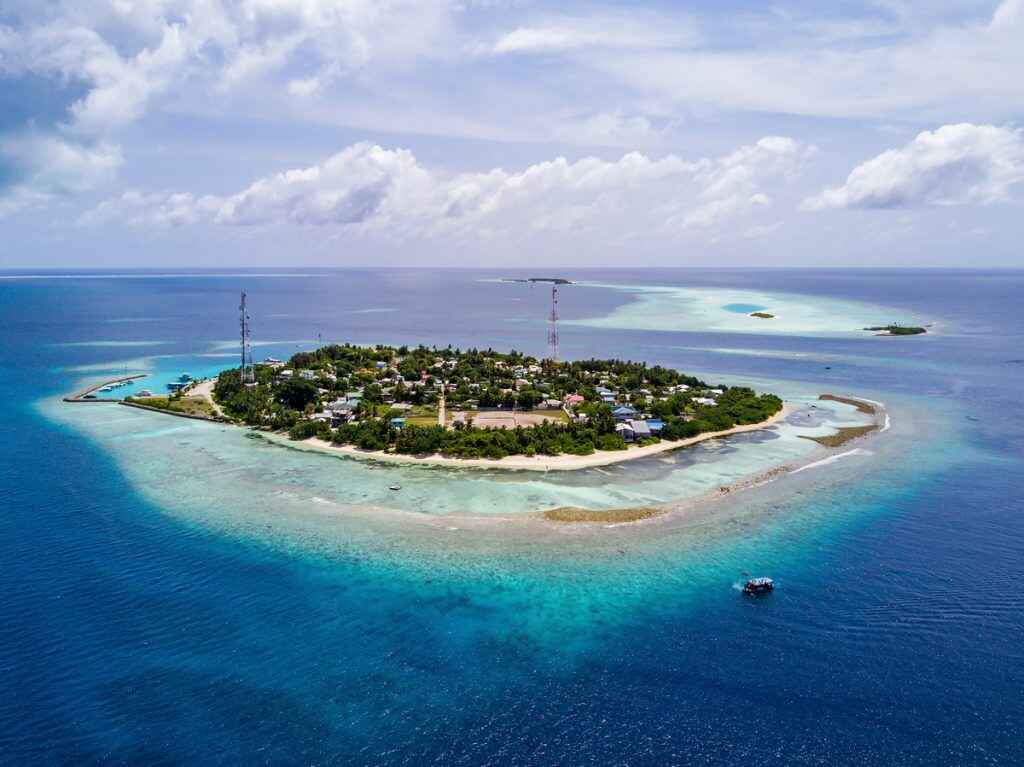
Rasdhoo Atoll measures 13 kilometres from north to south and 4 kilometres east to west. It has two inhabited islands and a handful of uninhabited reef formations. By any measure of size or development, it is one of the smallest and least significant atolls in the Maldivian archipelago.
And yet divers from across the world plan trips specifically to reach it.
The reason is Hammerhead Point a blue water dive site off the outer wall of the atoll where scalloped hammerhead sharks are resident year-round. Add to that the Rasdhoo Channel between Kuramathi and Rasdhoo island, the Madivaru Corner reef system, the Manta Block cleaning station, a wreck accessible to beginners, and a local inhabited island with genuine community character and Rasdhoo Atoll delivers a diving and travel experience that its size suggests nothing about.
The Geography
Rasdhoo Atoll sometimes written as Rasdu Atoll sits approximately 58 to 60 kilometres west of Malé, at the northeastern edge of the greater Ari Atoll region. It is administratively separate from Ari Atoll but geographically adjacent, positioned where the nutrient-rich currents of the open Indian Ocean converge with the central atoll reef systems to create the feeding conditions that draw large pelagic species year-round.
The compact ring structure of the atoll concentrates those currents through narrow channels. Where the water accelerates, cleaning stations form. Where cleaning stations form, hammerheads gather. The geography is the reason the marine life exists here in the concentrations that have made the atoll famous.
Two inhabited islands define the atoll for visitors: Rasdhoo island the local community island with guesthouses, cafe s, and a traditional fishing character and Kuramathi a 1.4-kilometre resort island that contains Kuramathi Island Resort, the largest and only resort property in the atoll.
In 2018, the Rasdhoo-Madivaru area was declared a marine protected area following a successful community campaign to prevent a luxury resort development on the picnic islands of Madivaru and Madivaru Finolhu. Ownership of those islands passed to the Environmental Protection Agency in 2019, managed by the Rasdhoo Atoll Council. The reefs here are now formally protected and the community that fought for that protection still dives and snorkels in them regularly.
Hammerhead Sharks - The Honest Picture
Hammerhead Point at Madivaru is one of the most famous dive sites in the Maldives and one of the few places in the Indian Ocean where scalloped hammerhead sharks are resident year-round rather than seasonally. There is no season they are present throughout the year.
The dive works on a specific timing principle. Hammerheads are most active near the surface and in the shallower blue water in the early morning before sunrise, when they come to the cleaning stations at the atoll edge. As daylight increases and the current shifts, they descend to deeper water. The window for the encounter is narrow typically between 5:30 and 7:30am and operators run the dive from Kuramathi in an 8-minute boat ride to the site for early morning departures.
The dive itself is a blue water experience. Divers descend to 25 to 30 metres off the outer wall of the atoll and hang in open ocean, waiting in the grey morning light for the sharks to appear. On a productive dive, schools of scalloped hammerheads which grow to approximately 3 metres and travel in groups are visible circling through the water before moving deeper as the day advances.
An honest note: Hammerhead encounters at Rasdhoo have become less consistent than they were in previous decades. By August 2023, the Rasdhoo Divers dive centre at Kuramathi had stopped offering the dedicated Hammerhead Point excursion as a scheduled dive due to reduced sightings at the specific site. Encounters still occur the sharks are resident in the Rasdhoo-Madivaru channel system year-round but the frequency has decreased. Local community divers report hammerheads, silvertips, and occasional rare leopard sharks in the channel between Rasdhoo and Madivaru islands. The National Geographic documentary filmed here about the hammerhead population brought significant attention to the site in earlier years.
For guests who want the best current information on hammerhead encounter rates, contacting Kuramathi's Rasdhoo Divers dive centre or local operators on Rasdhoo island directly before booking is the most reliable approach. Conditions and encounter frequency change year by year.
What has not changed is the quality of the remaining dive sites across the atoll which are genuinely excellent with or without hammerheads.
Dive Sites of Rasdhoo Atoll
Kuramathi Island Resort
Kuramathi Island Resort is the only resort in Rasdhoo Atoll and one of the more comprehensive resort properties in the central Maldives for dive-focused guests. The island is 1.4 kilometres long large by Maldivian standards and the resort occupies it entirely across three different accommodation zones spread along the beach, each with a slightly different character.
Accommodation covers 292 villas in beach and overwater categories. The beach villas span garden, beach, and water's edge positions. Overwater villas are positioned above the lagoon at the eastern end of the island. The scale of the resort gives genuine variety in accommodation character that smaller properties cannot offer.
The Rasdhoo Divers dive centre is one of the strongest operations in the central Maldives. Access to 20-plus local Rasdhoo Atoll sites within an average 15-minute boat ride, supplemented by half-day and full-day trips to over 30 North Ari Atoll sites reachable in approximately 90 minutes. Free nitrox for certified nitrox divers is included. The resort has the largest decompression chamber in the Maldives a six-person hyperbaric chamber operated with three doctors on the island, including a local and two European physicians, which provides a level of medical safety infrastructure that most Maldivian resorts cannot match.
The house reef at Kuramathi is exceptional by central Maldivian resort standards. Three species of reef shark grey reef, blacktip, and whitetip are regularly encountered on a single snorkelling session from the beach. Sea turtles, eagle rays, and the full range of reef fish diversity are accessible without a boat excursion. A hammerhead shark was sighted directly at the Kuramathi jetty in August 2023 described as an absolute exception by the dive guides who witnessed it.
Facilities include the Kuramathi Spa, the Bageecha Kids Club, an Eco Centre with a sperm whale exhibit, a fully equipped gym, multiple pools, a disco, an excursion centre, a water sports centre, tennis courts, and a football field. The 200-metre sandbank at the northern tip of the island is one of the most beautiful natural beach formations at any Maldivian resort best visited between 8am and 9am before the island shuttles begin running guests there.
Dining covers multiple restaurants with a buffet format as the primary offering. The resort's scale gives more dining variety than boutique properties, and the kitchen handles the volume consistently.
Rasdhoo Island - The Local Community
Rasdhoo island is the administrative capital of Rasdhoo Atoll and one of the most genuinely rewarding local island visits available in the central Maldives. The island is small walkable completely in under 20 minutes and the community character is authentic rather than constructed for tourist consumption.
The fishing boats in the harbour are working vessels. The local cafes serve short eats and sweet tea at local prices to local people. The mosque marks the rhythm of the day with the call to prayer. And the community divers who spend their spare time in the Rasdhoo-Madivaru channel protecting the reef they successfully fought to preserve as a marine protected area give the island a specific identity people who know this water intimately and care about it.
Guesthouses on Rasdhoo island provide simple but clean accommodation for independent travellers primarily divers and snorkellers who want access to the atoll's sites at budget prices. In 2024, four dives cost approximately USD 240 through local dive schools on the island. The house reef accessible directly from the Rasdhoo beach provides turtle and reef shark snorkelling without a boat excursion.
Madivaru Finolhu the narrow sandbank picnic island a short boat ride from Rasdhoo is accessible for day visits for sunbathing, snorkelling, and sunset watching. It is managed by the Rasdhoo Atoll Council as part of the marine protected area. Tides govern the sandbank's emergence checking with local operators or the guesthouse for the optimal tidal timing before visiting is worth the two-minute conversation.
Day trips between Kuramathi and Rasdhoo island are possible in both directions Kuramathi guests can arrange island visits, and Rasdhoo guesthouse guests can book Kuramathi day passes for resort facility access. The crossing takes minutes by local boat.
Rasdhoo vs Ari/North Male
| Factor | Rasdhoo | Ari | North Male |
|---|---|---|---|
| Signature | Hammerheads | Whale sharks | Banana Reef |
| Transfer | 25min seaplane | 25-40min | Speedboat 10-55min |
| Resort Density | 1 (Kuramathi) | Multiple | 25+ |
| Community | Rasdhoo island (protected reefs) | Limited | Thulusdhoo surf |
Getting to Rasdhoo Atoll
Seaplane from Velana International Airport is the standard transfer for Kuramathi Island Resort approximately 25 minutes. Seaplanes operate during daylight hours only. Late international arrivals risk missing the last seaplane and require an overnight in Malé or Hulhumalé.
Speedboat from Male is the alternative approximately two to two-and-a-half hours direct from the airport area to Kuramathi. Some guests prefer this for the lower cost and the flexibility of any-hour travel.
Public ferry from Male via Ari Atoll connects to Rasdhoo island on a scheduled service considerably longer but the most affordable option for budget travellers staying at island guesthouses.
Domestic flight to Maamigili Airport in South Ari Atoll followed by a speedboat north to Rasdhoo is another option for guests combining a South Ari Atoll stay with a Rasdhoo dive trip.
Best Time to Visit Rasdhoo Atoll
November through April the dry season with the northeast monsoon offers the most settled surface conditions, best visibility, peak manta activity at Manta Block, and the most consistent underwater conditions across the main dive sites.
December through April is specifically cited as the most reliable period for hammerhead encounters based on current conditions at the outer wall sites.
June through September is the wettest period with reduced visibility underwater but still productive diving at the channel and thila sites. These months are less recommended specifically for the Hammerhead Point dive.
The atoll is diveable year-round. The channel and reef sites produce consistently good conditions across all months, and the resident marine life sharks, turtles, rays, and the full reef diversity does not vacate the atoll seasonally.