First Time in Maldives: Which Island is Right for You?
Planning your very first trip to the Maldives is a very exciting experience, but it is also one of the most misunderstood experiences you can have as a traveler. Unlike other places you might have visited or hope to visit, which allow you to go from city to city, explore places of interest, and create day-by-day itineraries, the Maldives is a very different experience altogether. In the Maldives, your entire experience as a tourist is centered on making the right choice of island resort.
The Maldives comprises over 1,000 islands, but only a handful of those islands are developed as resort islands. What this essentially means is that each resort island is a separate entity, a separate world, which is designed to provide you with a self-contained experience, i.e., everything you might want to experience as a tourist is contained within the resort island you are staying at, and you won't be "exploring the Maldives" in the conventional sense of the word.
To new travelers, this can be overwhelming. It is natural to think that all Maldives resorts are the same. They have white sand beaches, clear waters, and luxurious villas. This is true to some extent. However, the reality is much more complex. Different resorts have different sizes, atmospheres, price points, and dining options. If you make the wrong choice, you can have few dining options, few activities to do, and even have to pay for things you didn’t anticipate.
This is why proper planning is important. When you come to the Maldives, you cannot adjust later. Everything is set in stone. Even the smallest details will make a difference in your vacation.
Visa For Maldives
To enter the Maldives, you don't need a pre-arrival permit. The Maldives follows a visa-on-arrival policy for every nationality. Yet, the preconditions to avail of a visa-on-arrival are a passport with six months validity, a return ticket confirmation to ensure you won't remain in the country, and an ensured hotel booking. Your airline of travel will pass on to you a Maldives immigration form, which is merely a mandatory form to fill in your identification information, inbound and outbound dates, and the affirmation that you're not importing alcohol in the state (yes that's a big one).
Immigration in Velana International Airport in the Maldives is fairly easy. Though, it will take slightly longer than the norm because immigration officials usually require a copy of your confirmed hotel reservation and return ticket. You can show these confirmations on your phone, but it is recommended to carry hard copies in order to save time. They will also ask how much USD you're bringing with you, which is only a normal immigration question and not something to worry about. There is no set minimum or maximum amount to bring into the Maldives, but it's best to bring sufficient funds to pay for your expenses during your stay.
All About Transportation In The Maldives
Since the Maldives consists of 99% water and 1% land, it is not surprising that first-time visitors might think that sea transport is the only way to travel in the Maldives. This is only half the truth. Transport from Velana International Airport to the different resort islands is either by speedboat or seaplane. Guests are whisked by speedboats to nearby islands in the forty-to forty-minute vicinity, as seaplanes serve to ferry for even further-out areas.
For the remote islands, visitors are swept away from the airport to the resort by seaplane. It's a trip in itself, although one with a very steep price tag. A tip if seaplane fare is out of your budget, look for a resort close to the airport. Seaplane transfers from Velana Airport are handled by Trans Maldivian Airways.
Most of the time, the cost of the seaplane and speedboat transportation to and from the airport is included in the total accommodation charge at the resort. However, it's best to confirm this with the resort directly before you make your reservation. When you arrive at the Velana International Airport, you'll see booths for about fifty to sixty resort islands located just outside the arrival terminal. One of our resort representatives will be available to meet and escort you to your assigned vehicle of transportation.
Is Male Maldives Worth The Visit?
Budded in the rich Maldives landscape, Male invites visitors to promises of cerulean water and enchanting culture. Lacking in small stature, Male's bustling capital island provides an enriching amalgam of encounters. From the splendor of the golden-domed Islamic Centre to the twisted streets filled with rainbow-colored bazaars, Male captures Maldivian living.
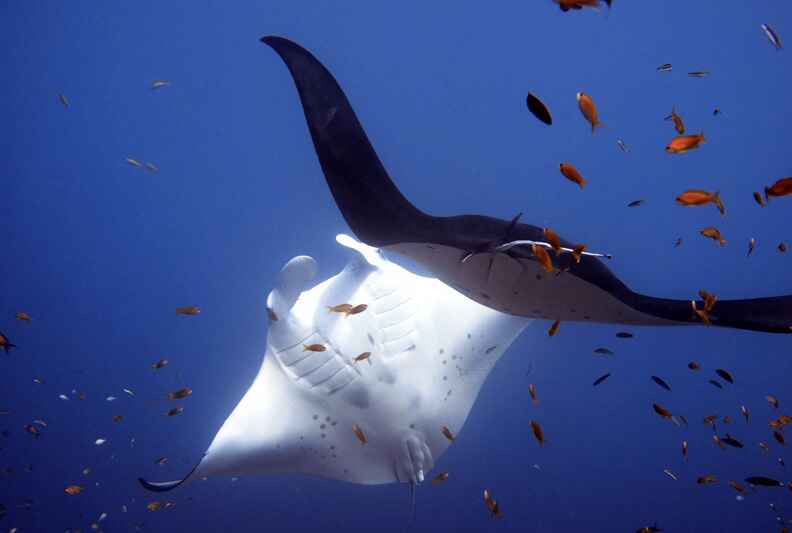
Dive beneath the waves and find yourself in an ocean filled with marine treasures. Snorkel with majestic manta rays or immerse yourself in the rainbow world of coral gardens. Relax on unspoiled beaches, where the wave's rhythm lulls the soul.
However, Male is not just a destination it's an experience of Maldivian authenticity. Interact with the people, enjoying traditional food seasoned with exotic spices, and indulge in ancient customs. Whether looking for adventure or relaxation, Male is an odyssey of discovery, a tribute to the lasting charm of the Maldives.
Where To Stay In The Maldives?
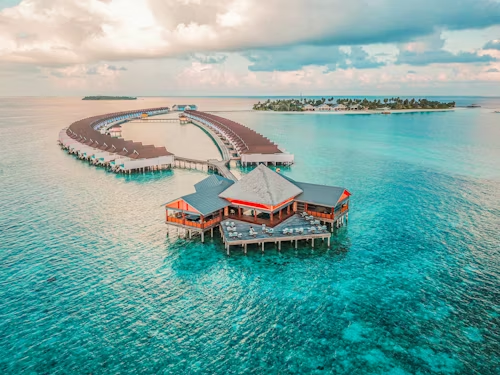
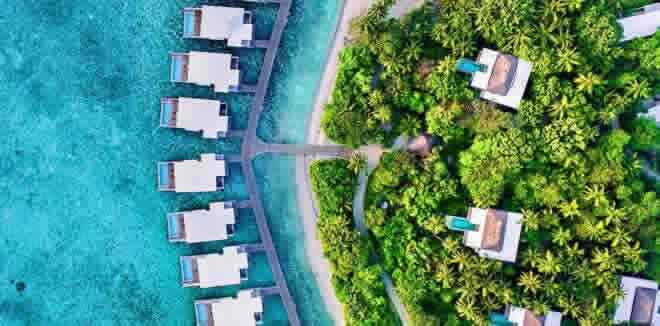
The choice of accommodation in the Maldives is the most critical decision for first-time visitors, as it will determine the entire experience of the vacation. The Maldives has many types of accommodation, ranging from ultra-luxury private island resorts to budget-friendly guesthouses on local islands. If you are looking for the best experience in the Maldives, private island resorts are the best choice, as they offer luxurious over-water villas, beautiful beaches, and world-class services. If you are traveling with family or planning to stay in the Maldives for a long time, you should choose a resort with several facilities, including restaurants. If you are on honeymoon, you should choose a smaller island for the best experience. If you are on a tight budget and looking for the best experience in the Maldives, you should consider local islands, as they offer the best experience in the Maldives at affordable prices.
What To See And Do You In The Maldives?
The Maldives, a tropical haven of an archipelago in the Indian Ocean, boasts an abundance of stunning landscapes and exhilarating activities. Swim in the crystal waters teeming with a rich variety of marine life, and discover a kaleidoscope of colors in the coral reefs beneath. Among the best are swimming with giant whale sharks and manta rays, or diving shipwrecks and underwater caves.
Over the water, the Maldives is a tranquil escape like nowhere else. Laze on spotless white-sand beaches with swaying palm trees, and indulge in healing spa treatments that gaze out across the aquamarine lagoon. For more energetic travelers, embark on a sunset cruise on a classic dhoni, with the sky color-shifting to orange and pink.
Immerse yourself in the colorful culture of the Maldives with excursions to local islands and a sampling of traditional Maldivian cuisine, full of coconut, seafood, and fragrant spices. Be sure to explore the lively capital city of Malé and walk through colorful markets, view iconic landmarks, and greet friendly locals.
Regardless of whether you desire relaxation, excitement, or culture, the Maldives offers an experience that will be remembered forever and leave you enchanted and rejuvenated.
How To Dress-Up In The Maldives?
Maldivian formal dressing is a mix of comfort, practicality, and tradition respect. Hot weather requires light, loose, ventilated cotton and linen clothing to keep one cool under the sun's heat. Dress in loose clothes such as long flowing gowns, shorts, and light shirts to remain comfortable when it is hot.
In regards to swimsuits, the majority of Maldives resorts do have special beaches where bikinis are perfectly acceptable. Nevertheless, one has to be sensitive culturally when venturing outside these special beaches, particularly if it is in more traditional neighborhoods. In these cases, it is respectful to use a sarong or cover-up when venturing away from beach or poolside regions.
You will want shoes to be easy to slip on and off because you will likely spend the majority of your time on sandy shores or swimming pools. Sandals or flip-flops are the most convenient for walking through sandy terrain.
Never forget to bring an umbrella or wide-brimmed hat, sun glasses, and plenty of sunscreen to cover your skin from the harsh tropical sun. And never forget, modesty and comfort should go hand in hand to make for a wonderful and respectful venture in this beautiful island haven.
What To Eat In The Maldives?
When eating out at Maldives, prepare yourself for a flavor so vibrant from colors as vivid as the waters surrounding you. With plenty of sea food and fresh fish, and combinations of Indian, Middle Eastern, and Asian spices, Maldivian food is an adventure in flavors like no other.
Seafood Extravaganza: Being an archipelago, the Maldives offers a range of seafood delights. From the tasty lobster to the delectable prawns and fish varieties such as tuna, mahi-mahi, and grouper, there is an oceanic spread to satiate every seafood lover's appetite. Try Maldivian traditional fish curries, barbecued fish, or the popular local dish "mas huni," a delectable mix of shredded smoked fish, coconut, onion, and chili, often accompanied by flatbread.
Coconut Infusion: Coconuts surround Maldivian food, bestowing a distinct flavor on nearly every dish. Indulge in rich coconut curries, refreshing coconut water straight from the husk, or indulgent coconut sweets like "bondi" (coconut cake) and "huni roshi" (coconut-filled flatbread).
Exotic Fruits: Enjoy the island haven by feasting on a variety of exotic fruits. Whether it is luscious mangoes and papayas or sour pineapples and bananas, the Maldives is blessed with a rich abundance of fresh fruits to tantalize your taste buds. Do not miss trying the local fruits "soursop" and "rambutan" for that authentic tropical taste.
Global Influences: Since the Maldives is geographically isolated, it is susceptible to global influences of food coming from the remaining world. Sample international food, which can come in the forms of Japanese sushi and Thai curry or Italian pasta and Indian tandoori cooking. Theme meals are common with most of the resorts, a feature that allows tourists to test various food cultures as well as appreciate the work of sea panoramas.
Sweet Endings: Complete your gastronomic tour on a sweet note with rich Maldivian sweets. From "kulhi boakiba" (coconut cake) and "foni boakiba" (sweet rice flour cake) to "bondibai" (coconut custard) and "dodol" (sweet toffee-like confection), there's a sweet delight for every sweet tooth.
Best Time To Visit The Maldives
The Maldives is a tropical country and it remains rainy for all but a minority of the year. The finest time to explore the Maldives is between the months of November and March, which are the summer months for the humid country. May until October is peak rainy season, so if rain doesn't strike you as particularly wonderful then avoid a trip to the Maldives during this duration.
Currency In The Maldives
The Maldivian Rufiyaa is the local currency of Maldives but US dollars are widely accepted and received everywhere in Maldives. It is advisable to receive a little local currency as well as dollars. The Velana International Airport currency swap only accepts very few currencies of the world, hence receive your money exchange from the country of entry.
Best Places In The Maldives
The Maldives, a chain of unmatched beauty in the Indian Ocean, boasts an array of breathtaking locations. One of them is Baa Atoll, a UNESCO Biosphere Reserve, with vibrant coral reefs and abundant marine life. For those seeking seclusion, the isolated island of Dhigurah, with its pristine beaches and blue waters, is the perfect retreat. Meanwhile, the Male capital is a living mosaic of heritage, culture, and modern amenities, with bustling markets and rainbow mosques. The luxury resorts in North Male Atoll offer ultimate pampering in the shape of world-class facilities such as overwater bungalows and opulent spas. Adventure seekers discover Vaadhoo Island's sea of starry lights, created by bioluminescent phytoplankton, an otherworldly experience. Whether it's snorkeling among rare sea life or lounging on deserted shores, the Maldives promises an unforgettable stay in paradise.
Compare Live Rates & Exclusive Deals
Compare Live Rates & Exclusive Deals
Featured Hotels & Guides in this Collection (3)
First Time Diving in Maldives
First Time Spa Guide