
Things to do in Maldives at Night
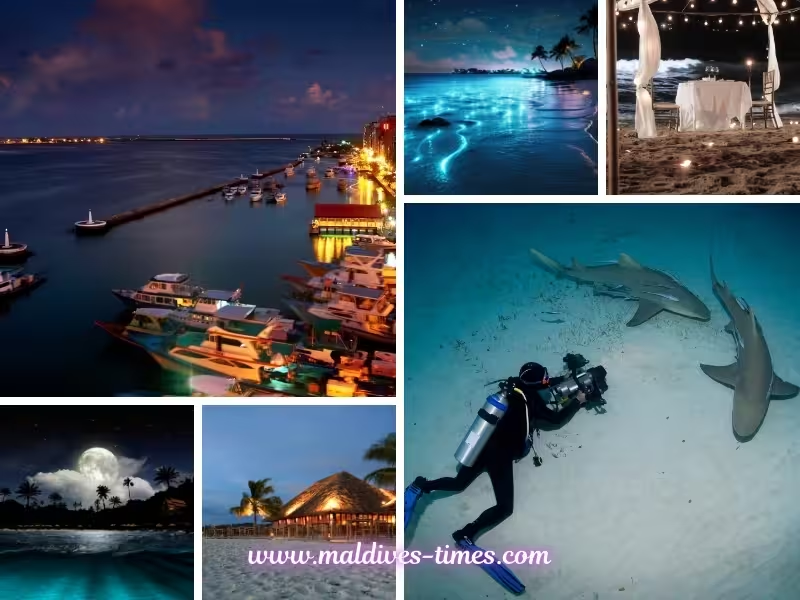
About Things to do in Maldives at Night
When the Sun Goes Down, the Maldives Gets Better
Most people who come to the Maldives spend their days in or on the water - snorkelling at dawn, lying on the beach at noon, watching the sun sink into the Indian Ocean in the evening. The days are easy to fill. What surprises first-time visitors is what happens after dark.
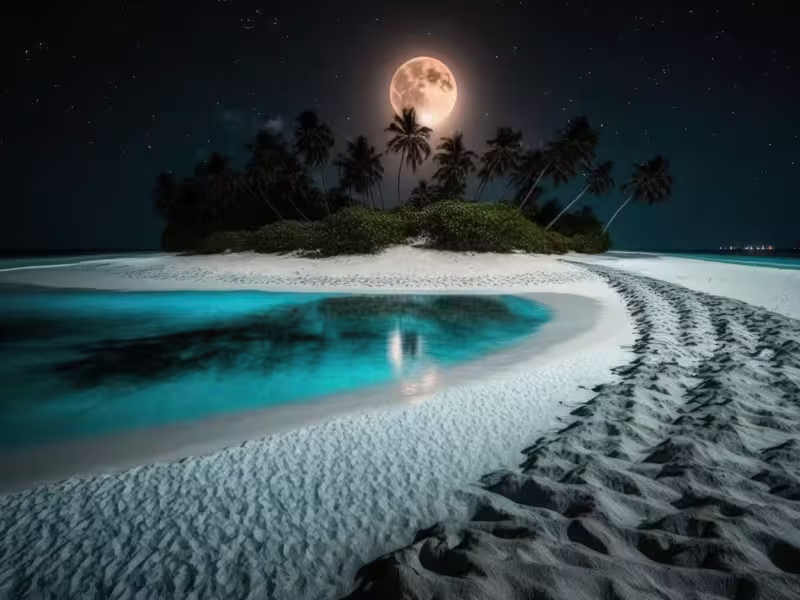
The Maldives at night is a different place. The heat of the day softens into warm dark air that smells of salt and tropical vegetation. The resort quietens. The water, which was turquoise in the afternoon, becomes something else entirely - black and vast and occasionally, where the current disturbs it, briefly, impossibly blue. The sky, free of any light pollution for a hundred kilometres in every direction, fills from horizon to horizon with stars.
This is not a place where the night is something to wait through until morning. It is a place where some of the best things happen after dark - things that are not available anywhere else on earth in quite this form. Here is what you should not miss.
1. Walking on a Glowing Beach – Bioluminescence
There is something that happens on certain beaches in the Maldives - particularly around Vaadhoo Island in South Male Atoll and at several resort beaches - that looks as if it should not be real. When the conditions are right and the water is disturbed, the shoreline glows. A quiet blue-white light pulses in the sand, flares briefly where a wave breaks, trails from your fingers if you reach into the water.
The cause is bioluminescent phytoplankton - microscopic marine organisms that emit light when disturbed as a stress response. The effect, when you are standing alone on a dark beach watching the Indian Ocean light up at your feet, is one of the most disorienting and beautiful things a human being can experience in the natural world. People try to photograph it. The photographs never quite capture it. That is fine.
Bioluminescence is most vivid during or just after a plankton bloom, typically between June and October, and is most visible away from resort lighting. If your resort beach does not show strong bioluminescence, ask staff whether there is a darker stretch of shoreline, a sandbank, or a guided night experience built around it. Some resorts offer dedicated bioluminescence kayaking or night walks for exactly this reason.
2. Night Diving – A Different Ocean After Dark
Divers who have spent their days exploring the Maldives reef in daylight and then do their first night dive often describe it as feeling like a completely new ocean. They are right, in a sense - the marine life that hides in the reef during the day comes out at night, and the species that are active in sunlight retreat. The result is a reef that looks and behaves entirely differently.
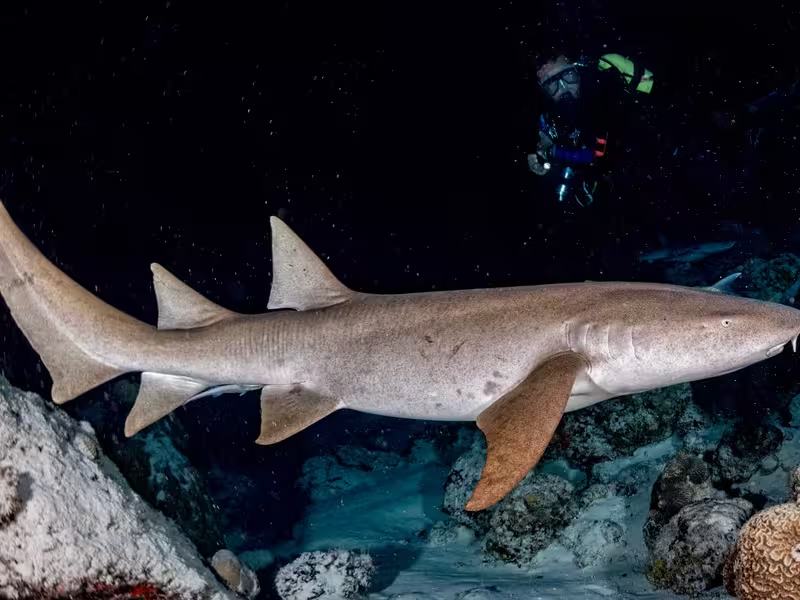
Torchlight catches the colours of the coral with a vividness that sunlight, filtered and scattered, never quite achieves. Moray eels are out hunting. Lobsters pick their way across the reef floor. Octopuses move through the coral, changing colour as they go. Nurse sharks cruise slowly along the sandy bottom. And in the open water above you, if you kill your torch for a moment and wave your hand through the dark, the bioluminescent plankton trail behind your fingers in tiny sparks.
Alimatha in Vaavu Atoll is one of the Maldives' most celebrated night dive locations, known for nurse sharks and reef sharks that congregate in large numbers after dark. Kuredu Resort in Lhaviyani Atoll offers night dives through an underwater tunnel system where turtles, parrotfish, and lobsters shelter. Most resort dive centres across the Maldives offer guided night dives as a standard addition to their daily programme. Book in advance during peak season.
Night diving requires a certified PADI Open Water qualification. If you have not dived before, the night dive is not the place to learn - but if you are certified and have not yet done a night dive, the Maldives is one of the finest places on earth to do your first.
3. Traditional Night Fishing – The Way Maldivians Have Done It for Centuries
Night fishing is one of the oldest traditions in the Maldives. Long before resorts, long before tourism, Maldivian fishermen worked the channels and reefs after dark, using handheld lines and the knowledge of where the big fish move when the sun goes down. Many resorts now offer guests the chance to join a guided traditional night fishing excursion - and it is, for reasons that are hard to predict, one of the most memorable experiences of a Maldives trip.
You go out by dhoni - the traditional Maldivian fishing boat - as the light fades. The crew sets the boat over a known fishing ground, sometimes marked by nothing more visible than a change in the colour of the water or a particular current. You are handed a line with a simple lure, nothing elaborate, and you drop it into the dark water. And then you wait, in the warm night air, under the stars, with the island a dark outline in the distance and the ocean on all sides.
The fish that come up in the dark - tuna, snapper, grouper, surgeonfish - are often larger than what you would catch in daylight. When you catch something, the crew's reaction is immediate and genuine. They have been doing this all their lives and the pleasure of a good catch has not diminished for them. At many resorts, the catch is taken back to the kitchen and prepared as a late barbecue dinner or fresh breakfast the following morning. The fish you caught the night before, grilled simply, eaten at sunrise. There are worse ways to start a day.
4. Private Sandbank Dinner – Dinner in the Middle of the Ocean
This is the Maldives night experience that people describe most often when they come home. A short boat ride from the resort. A natural sandbank - a strip of white sand barely above the waterline - with nothing on it in any direction except a table, two chairs, candles, and whatever the kitchen has prepared. Then the boat leaves. And you are alone in the Indian Ocean.
There is no ambient light out here. The Milky Way is visible with a clarity that most people have never seen it. The ocean surrounds you completely - you can hear it on all sides, feel the slight warmth of the sand through your feet. The candles flicker in the warm breeze but do not go out. The food arrives, somehow, as if by magic, and it is good — properly good, not resort-indulgent-good. At the best resorts this is a meal you would be happy to eat anywhere.
Most five-star resorts offer sandbank dining as a premium experience, typically at an additional cost beyond your meal plan. Book it early - slots are limited and the best weather evenings are reserved quickly. If a sandbank is not available, a similar experience can sometimes be arranged on a private beach section of the island or on the deck of a dhoni anchored away from the resort's main lighting.
5. Stargazing – The Sky You Forgot Existed
The Maldives sits at approximately 4 degrees north of the equator. This matters for stargazing in two ways: first, the island chain is far from any significant light pollution - the nearest major city is Male, and its glow is too distant to affect the sky from most resort islands. Second, the equatorial position means you can see constellations from both the northern and southern hemispheres, giving a view of the night sky that is simply not available from most of the places people live.
On a clear night - which in the dry season (November to April) is most nights - the sky above a Maldives resort is the kind of sky that makes people stop walking and look up. The Milky Way arcs across it from horizon to horizon. Shooting stars are common enough to be expected rather than wished for. The Southern Cross, invisible from Europe or North America, sits low in the south.
Several resorts have embraced this with dedicated stargazing programmes - telescopes, resident astronomers, guided sessions on the beach that walk guests through the southern sky. Soneva Fushi in Baa Atoll has a resident astronomer and one of the best-equipped stargazing facilities in the Maldives. But even without a programme, simply lying on the beach with the resort's lights dimmed behind you and looking up at the sky for twenty uninterrupted minutes is an experience that most guests consider one of the quietly defining moments of their trip.
6. Open-Air Cinema on the Beach
Cinema under the open sky is a growing feature at Maldives resorts, and when it is done well it is genuinely wonderful - a large screen set up on the beach or over the water, bean bags and sun loungers arranged in the sand, the warm night air, and a film chosen from a curated list. Some resorts add complimentary wine and canapes. Others keep it simple, which also works.
What makes open-air cinema at a Maldives resort different from anywhere else is the setting. The sound of the ocean replaces the air conditioning hum of a conventional cinema. The sky above the screen is full of actual stars. The temperature is exactly right. Children fall asleep in beanbags. Adults find themselves genuinely moved by films they have seen before, because there is something about watching a story unfold in that environment - quiet, warm, far from the normal world - that softens your defences.
Resorts known for strong open-air cinema programmes include Soneva Fushi, Velassaru Maldives, Baros Maldives, and Constance Moofushi. Check with your specific resort at check-in for the weekly schedule, as screenings are typically offered on set evenings rather than every night.
7. Night Kayaking – Gliding Through Glowing Water
If the bioluminescence is active, a night kayak becomes something extraordinary. You paddle slowly through water that glows faintly around your blade with each stroke. The trail behind your kayak briefly illuminates. If you stop paddling and dip your hand over the side, the small organisms disturbed by your fingers light up like fading sparks.
Even without strong bioluminescence, night kayaking on a calm Maldivian lagoon has its own appeal. The water is warm. The island is visible in silhouette against the stars. The only sounds are the paddle and the ocean. Most guests who try it describe it as one of the most peaceful experiences of their trip - a kind of moving meditation that the daytime, with its activities and choices and ambient busy-ness, rarely allows.
Many resorts offer guided night kayaking as a bookable activity. If yours does not, ask whether unguided kayaks are available for evening use - some resorts allow this for confident paddlers in the calm lagoon area. Stick to the lagoon inside the reef. The open ocean at night is not the place for recreational kayaking.
8. Subsix – The Underwater Glow Party at Niyama Maldives
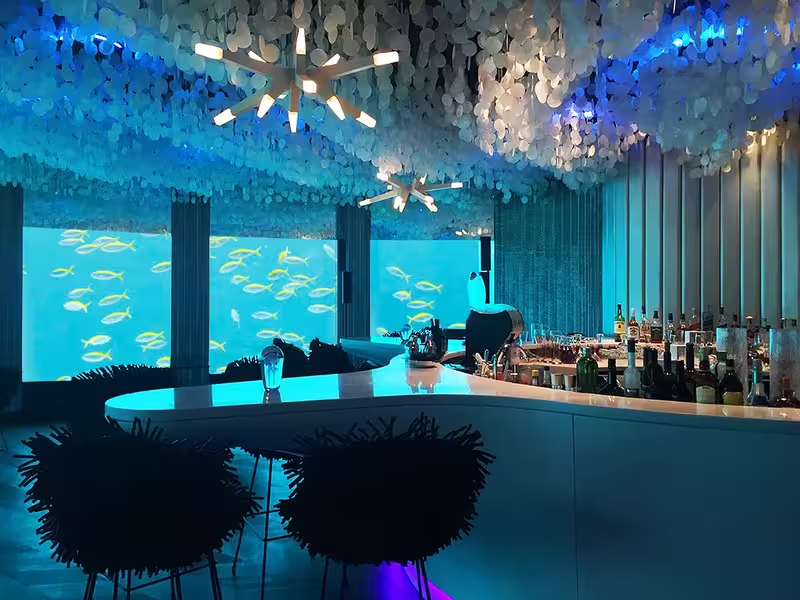
This one deserves its own category because nothing else in the Maldives is quite like it. Subsix is an underwater bar at Niyama Private Islands in Lhaviyani Atoll, situated six metres below the surface of the Indian Ocean. You reach it by speedboat from the main resort, then descend via a staircase into a glass-walled room on the ocean floor.
The design is theatrical - chandeliers shaped like coral formations, seating that resembles sea anemones, a bar curved like a giant clamshell. On Wednesday and Saturday evenings, Subsix hosts a glow party with DJs, UV lighting, and a cocktail programme that runs late into the night. On other evenings it operates as a restaurant and lounge, serving seafood and signature cocktails with the Maldivian reef as a living backdrop.
The experience of sitting below the ocean surface while parrotfish, turtles, wrasse, and sharks pass by the glass walls on the other side is one that does not have a comparison. The fish are entirely unbothered by the lights and music on the other side of the glass - they simply continue their evening, as they have always done. The guests on the other side of the glass, by contrast, tend to be slightly speechless.
Subsix is open to non-staying guests as well as Niyama residents, but reservations are essential. The glow parties in particular sell out well in advance during peak season.
9. Your Overwater Villa After Dark – Often Underestimated
Sometimes the best thing to do in the Maldives at night is to do very little, in the right place. An overwater villa at night is a different thing from an overwater villa in the day. The glass panel in the floor, which showed reef fish in sunlit water during the afternoon, now shows only darkness - but occasionally something moves through it, briefly caught by the glow from the villa lights. A small reef shark. A turtle. Something large and unhurried.
Sit on the deck after dinner. The lagoon stretches away in every direction. On a clear night the stars are reflected in the still water, so you appear to be suspended between two skies. The air is warm and salt-scented. Somewhere behind you the resort is operating - there might be music from the bar, or the distant sound of water — but here on the deck it is quiet.
This is not nothing. Sitting still in a genuinely beautiful place, at night, with the person you came here with, is one of the rarest experiences available in ordinary adult life. The Maldives makes it easy. Most people do not need to be told twice.
10. Evening Spa Treatment – When the Day's Heat Has Passed
Spa treatments in the Maldives are good at any time of day, but there is an argument that the evening is the best. The heat of the afternoon has eased. You have already been in the water. Your body is warm and loosened and ready to be slow. An overwater spa treatment room in the late evening, with the ocean visible through a window that opens to the lagoon breeze, is a particularly complete form of relaxation.
Many resort spas offer special evening treatments - couples' massages, star-lit spa journeys on outdoor treatment platforms, and post-dinner body treatments designed to be taken directly to sleep afterwards. At resorts like Kagi Maldives, Raffles Maldives, and the Coco Spa at InterContinental Maamunagau, the evening spa slot is actively the most sought-after of the day. Book early.
The Maldives Night Is Not to Be Slept Through
The conventional wisdom about Maldives holidays is that they are about the sea, the sun, and the beach. All of that is true. But some of the most lasting memories that guests bring home from the Maldives are nocturnal ones - the bioluminescent water at their feet, the stars above Hanifaru, the reef shark glimpsed through the glass floor panel at 2am, the candle that did not go out on the sandbank even though the ocean was on all sides.
Plan at least two or three nights deliberately. Not all of them - some nights in the Maldives should just be dinner and then sitting on your deck until you fall asleep to the sound of the ocean. But the ones you plan will reward the effort. The Maldives at night is patient, beautiful, and waiting.
Maldives Night fishing
Another Maldives popular night activity is night fishing. The Maldives is home to a range of fish, with tuna, sailfish, and marlin and visitors can try their offer at traditional Maldivian fishing method or go on a marine fishing trip. Night fishing will convey you up close to large night-time fish, and it also adds a deep sense of exhilaration and adventure to the experience.
Depending on the figure of edible catches, also you will be invited for a barbeque dinner or the fishes will be ready for you at the Maldives Sea Breeze Restaurant for tasting.
Try Night Diving
Scuba diving in the daylight in marine-filled seas is one thing; scuba diving at night is quite another. As you’ll have to set on your heroic face, scuba diving at night has a lot of advantages. For starters, many new species appear after dusk. Navigating the submarine location with only a torch to guide you is an entire other experience.
Alimatha is known for its amazing selection of marine life, which includes nurse sharks, turtles, rays, deals, and elegant colorful tropical fish. It is normally recognized as the best site for night diving. Some individuals maintain to have seen huge golden reef sharks up to 3 meters long! The night diving area is situated off the coast of Alimatha, an Italian-inspired resort, even if you don’t have to stay here to dive. Several nearby resorts and liveaboards opt to attach here around sunset to be a part of the activity.
Another Maldivian popular night dive spot is Kuredu Resort, which has its own system of underwater tunnels where green sea turtles, blue corals, crabs, shrimp, and folio fish may be establish. Night dives allow you to observe marine life in all of its exciting colors. If that wasn’t sufficient, there’s also wreckage 18 meters under the surface, which is a trendy hangout location for sleeping Napoleon wrasse, parrotfish, and lobsters, as well as a bioluminescent plankton hotspot!
Night Kayaking: Paddle under the Stars
Imagine gliding during the calm, crystal-clear waters of the Maldives, your kayak critical softly through the calm surface under the flame of the moon. Maldives Night kayaking offers a tranquil and unique adventure, allowing you to experience the island from a special viewpoint.
As you paddle, you will be bounded by the natural beauty of the Maldivian nightscape, sometimes illuminate by the slight glow of bioluminescent plankton beneath you and a gorgeous sky full of stars above you. It’s a memorable experience that combines the thrill of kayaking with the magic of a star-lit night, make it a must-try for someone visit this tropical heaven.
Maldives Open-Air Movie Screenings
If you must shield out a explode to stay at one of Maldives’ bungalows on water, let it also pleasure you to additions such as movie nights under the stars. A growing trend in this island nation is that of open-air theatres which are essentially huge screen propped up on a ridge, overwater or on the beach. Comfy sofa, beanbags or cushion are placed on the soft sand for the movie spectators to rest on while they watch a classic film and crunch on popcorn.
The cinema under the sky indulgent is currently offered by Maldives luxury resorts such as Velassaru Maldives, Amaya Kuda Rah, Baros Malidves, Kurumba Maldives, Constance Moofushi, Park Hyatt, Gili Lankanfushi and Soneva Fushi. The record seems to be increasing still. Some resorts also have free-flowing wine and canapés to develop your feel.
Stargazing
Nights are best enjoyed aware slight than snoozing at your luxury space! Maldives has this upturned thinking because of its astonishing night-time activities. On warm nights when breeze make you feel ‘snug as a bug in the rug’ on the powdery-sand beach, you will lays down on the isolated beach, with your beloved just near you, gazing at the sparkling, clouds-free sky of the Maldives. The romance-filled spirit of yours will contain to split a lot with each other. Never hesitate, the stars won't eye drop you. Sometimes you will still get a telescope at the resort to watch the sky-affairs from the seashore.
Attend an Underwater Glow Party
Maybe the most thrilling thing on this list, the underwater glow party at Niyama Resort’s Subsix Bar is really an experience to be loved. Held only on Wednesdays and Saturdays after 9 PM, this bar keeps the bash on until the little hours of the morning.
Subsix is an underwater glass-walled bar that lies 6 meters below the sea level. Every Maldives visitor needs to get a speedboat trip from the main resort to this nightspot and walk down three flights of staircase to enter a planet that seems directly out of a dream.
The ceiling is drape by chandeliers that reproduce coral formations, the seats have tentacles like those of anemones and the bar is twisted like a clam – the undersea idea is not lost even for an immediate. Grab on to your blaze sticks as you look at the most amazing part of the glow party – the marine life exterior the walls. You will be capable to spot parrotfish, wrasses, sharks, turtles, snappers, anemones and further.
In conclusion, there is an extensive range of activities that you can do in the Maldives during the night, from island hopping and fishing to spa treatments and beach party. Whether you're look for leisure or escapade, there's amazing for everybody in the Maldives. And with the long list of limited offerings, you're sure to include a great time. Each movement will offer you with a unique experience, and you can make memorable memories to take back home and take within your feeling for a lifetime!
Related Maldives Resorts & Hotels
 Related Resort
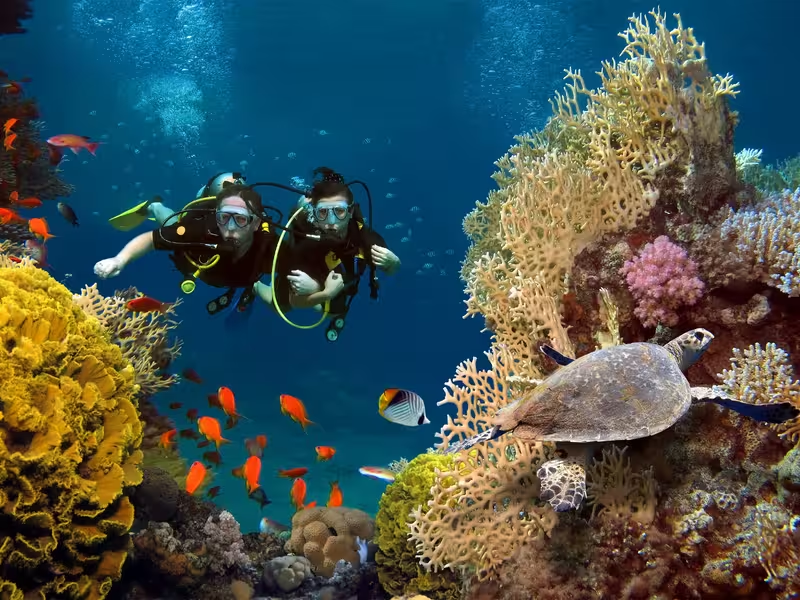
Scuba Diving In Maldives
The Maldives is not simply a good diving destination. It is one of the defining diving destinations on earth a place that serious underwater travellers plan trips around specifically, that divers return to repeatedly across different atolls and different seasons, and that produces encounters with marine life that are simply not available at most other dive locations.Understanding why requires understanding the geography. The Maldivian atolls are essentially reef rings enclosing lagoons, connected to the open ocean through channels called kandus. Tidal movement pushes nutrient-rich water through these channels twice daily, feeding the reef ecosystems and attracting the pelagic species mantas, whale sharks, hammerheads, grey reef sharks that define diving in the Maldives. The quality and diversity of what happens in these channels is what separates Maldivian diving from almost every other tropical reef destination.What Makes Maldives Diving ExceptionalThe kandu drift dive is the signature Maldivian dive experience. A kandu is a channel between two reef systems where the tidal current runs sometimes gently, sometimes powerfully. Divers enter the current and drift through the channel, watching the marine life gather on the reef walls to feed on the passing nutrients. Grey reef sharks hold position in the current. Eagle rays coast past at eye level. Schools of fusiliers hang in dense formations above the reef. At the right site, at the right current stage, a kandu drift dive is one of the most visually impressive dive experiences available anywhere.Thilas underwater pinnacles rising from the sandy bottom are another defining feature of Maldivian diving. Thilas are covered in soft coral and hard coral formations and surrounded by concentrations of marine life. The most celebrated, Maaya Thila in North Ari Atoll, is considered one of the finest dive sites in the Indian Ocean.Marine megafauna access is more reliable in the Maldives than almost anywhere else. Manta rays at Hanifaru Bay, whale sharks in South Ari Atoll, hammerhead sharks at Rasdhoo Atoll, tiger sharks at Fuvahmulah these encounters are specific to particular sites and seasons but they are predictable enough to plan around.Dive Sites by AtollNorth and South Male Atoll hold the most accessible dive sites from the airport. Banana Reef one of the most dived sites in the country is a 300-metre reef formation in North Male Atoll with excellent coral coverage and abundant fish life. HP Reef, also known as Rainbow Reef, is a deeper pinnacle site with strong currents that attract sharks and rays. Manta Point in South Male Atoll is a cleaning station where reef manta rays gather to have parasites removed by cleaner fish an encounter that is quietly extraordinary for the intimacy of the behaviour.Ari Atoll is the whale shark atoll. The resident population in South Ari Atoll produces year-round encounters at sites throughout the area. Maaya Thila in North Ari Atoll is the benchmark site for coral coverage and marine life density in the central Maldives.Baa Atoll contains Hanifaru Bay a snorkelling-only site protected within the UNESCO Biosphere Reserve where manta rays and occasionally whale sharks gather during the southwest monsoon season. The surrounding atoll dive sites benefit from the same nutrient-rich conditions that drive the Hanifaru aggregations.Vaavu Atoll specifically Miyaru Kandu, known as Shark Channel concentrates grey reef sharks, whitetip reef sharks, and occasionally hammerheads in the channel current. It is one of the most reliable shark dive sites in the Maldives.Fuvahmulah is the advanced diver destination. Tiger sharks are present year-round in the waters around this single-island atoll. Thresher sharks, oceanic manta rays, and hammerheads are also found here. The currents are strong and the depths significant this is not beginner diving.Northern Atolls Raa, Noonu, Haa Alif, Haa Dhaalu are the least visited and most pristine dive environments in the country. The reef health here exceeds that of the central atolls and the marine life density reflects the lower boat traffic and the protected nature of the furthest northern reefs.AtollSignature SiteBest ForAccessibilityNorth MaléBanana ReefBeginners, accessibilitySpeedboatSouth AriWhale shark sitesYear-round megafaunaSeaplaneBaaHanifaru Bay (snorkel)Manta aggregation Jun-OctSeaplaneVaavuMiyaru KanduShark channelSpeedboatFuvahmulahTiger shark sitesAdvanced predatorsDomestic flightCertification Levels and What They AccessOpen Water certified divers can access most standard Maldivian dive sites up to 18 metres. The majority of the most celebrated sites including Maaya Thila, Banana Reef, and most kandu drift dives are accessible at this level in appropriate current conditions.Advanced Open Water certification is recommended for drift diving in stronger currents, for deeper thila sites, and for the better-known pelagic encounter sites. The Advanced Open Water course is available at most resort dive centres in the Maldives and takes two to three days.Rescue Diver and above is required by some operators for the strongest current sites and for the more challenging Fuvahmulah sites. Divers with rescue-level training or above have access to the full range of Maldivian dive experiences.Non-certified beginners can access the Maldives through resort Discover Scuba Diving programmes introductory dives under direct instructor supervision to a maximum of 12 metres. Most resort dive centres offer this daily and it gives non-certified guests a genuine first scuba experience in Maldivian water.Best Dive Resorts in the MaldivesResort dive centre quality varies significantly. The factors that separate a strong dive operation from an average one are the experience level of the dive guides, the condition of the equipment, the daily dive frequency possible, and the site coverage available from the resort's location.Bandos Maldives has operated one of the longest-running dive programmes in the country with extensive North Male Atoll site coverage. Huvafen Fushi delivers exceptional guide quality in a boutique resort context. COMO Maalifushi in Thaa Atoll gives access to uncrowded sites in excellent condition. W Maldives offers whale shark diving from the resort in North Ari Atoll. Fuvahmulah Dive School is the specialist operator for tiger shark encounters.Diving Costs in the MaldivesDive centre pricing at Maldivian resorts is typically USD 80 to USD 120 per single boat dive, with package pricing reducing the per-dive cost for guests planning multiple dives daily. All-inclusive resorts that include diving Kudadoo, Atmosphere Kanifushi represent the most cost-effective way to dive frequently. The round-trip seaplane transfer cost to distant atoll resorts should be factored into the total diving trip cost, not just the per-dive rate.2026 Dive Pricing ReferencePackage TypePer Dive CostNotesSingle Dive$80-120Includes boat, guide, gear10-Dive Package$60-80Multi-day volume discountAll-InclusiveIncludedAtmosphere Kanifushi, KudadooLiveaboard$150-300Multiple sites daily
 Related Resort
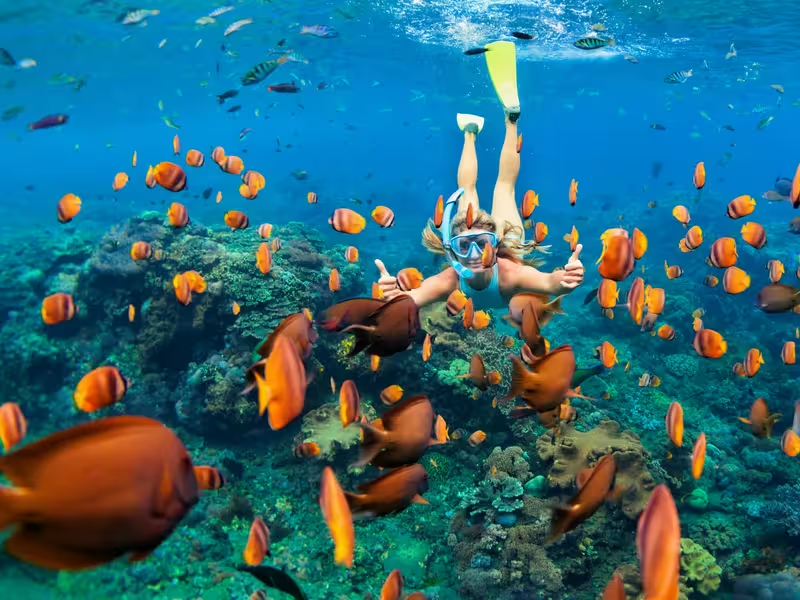
Best Snorkeling Spots in the Maldives
You don't need a scuba certification to have the best underwater experience of your life in the Maldives.That's worth saying clearly, because a lot of first-time visitors assume the serious stuff the manta rays, the whale sharks, the reef sharks cruising past at arm's length — belongs exclusively to divers. It doesn't. Some of the most extraordinary wildlife encounters this country offers happen at the surface, visible to anyone who can swim, fit a mask, and breathe through a tube.Manta ray aggregations at Hanifaru Bay. Whale sharks feeding near the surface in South Ari Atoll. Turtles resting on coral heads ten metres from the villa steps. Blacktip reef sharks doing slow laps of the lagoon in water so clear you can count their markings from above. All of it accessible without a single dive qualification, a regulator, or a wetsuit.The Maldives happens to be one of the best snorkelling destinations on earth, not as a consolation prize for non-divers, but on its own terms. The water is warm year-round between 27°C and 30°C in every atoll, every month. The visibility on a good day runs 15 to 30 metres. The marine life density is driven by the same nutrient-rich currents that make Maldivian diving world-famous, which means even a 20-minute snorkel from a decent house reef produces encounters that would be the highlight of a week's diving at lesser destinations.The single most important decision you make as a snorkeller planning a Maldives trip is not which atoll to visit or which transfer type to book. It's which house reef sits beneath your resort. Some resorts have exceptional reef rich coral, resident sharks and turtles, marine life accessible directly from the beach or the villa jetty. Others sit above flat sandy lagoon with no interesting reef within swimming distance. The room price and the overwater villa photos tell you nothing about this. You have to research it specifically, and this guide is a good place to start.What Makes Maldives Snorkelling DifferentMost snorkelling destinations ask you to manage two things at once: finding the marine life and dealing with average water conditions. The Maldives removes the second problem entirely.The visibility here is exceptional. On a clear day across most atolls, you see 15 to 30 metres in every direction. The water is warm enough that you need no wetsuit and no acclimatisation you get in and start looking around immediately. The reef systems that run through the atolls support marine biodiversity that few places on earth match, which means the odds of seeing something genuinely remarkable on any given snorkel are high rather than hopeful.What you do need to manage is the current. The tidal flows that push through Maldivian channels and around reef edges create extraordinary diving conditions, but they can move a snorkeller off a reef quickly if the timing is wrong. Follow resort guidance on safe entry times. Stick to the lagoon side of the reef rather than the channel edges. The ocean here rewards the attentive and catches out the careless.Best Snorkelling Sites in the MaldivesHanifaru Bay, Baa Atoll is the most famous snorkelling site in the Maldives and one of the most remarkable wildlife experiences on the planet. Between May and October, manta rays gather in this protected bay within the UNESCO Biosphere Reserve to feed on plankton-dense water. On a good day the aggregation runs to over a hundred animals. On a quiet day it runs to a dozen. Either way, swimming above manta rays banking and rolling through the current below you is the kind of experience that stays with you for the rest of your life. Scuba diving is prohibited at Hanifaru snorkelling is the only way in, which makes this one of the few world-class marine wildlife encounters that belongs entirely to snorkellers.South Ari Atoll is the place to snorkel with whale sharks. A resident population lives in this atoll year-round, and the animals regularly feed near the surface, visible clearly from snorkelling depth without needing to dive down. The scale of a whale shark observed from above the full length of it moving slowly beneath you is something photographs don't prepare you for.Maaya Thila, North Ari Atoll is primarily known as a dive site, but in calmer current conditions the pinnacle rises close enough to the surface to produce excellent snorkelling. Reef sharks, turtles, and eagle rays congregate around it in numbers that are visible from the surface when the water is clear and the current is manageable.Rasdhoo Atoll offers good reef snorkelling directly from the shore of the local island, which means you don't need a resort booking to access it. Travellers staying at guesthouses on Rasdhoo can walk into the water from the beach and snorkel the surrounding reef systems without any excursion fee or boat trip.
 Related Resort
Maldives Spas In Maldives
A spa treatment in the Maldives is not the same experience as a spa treatment anywhere else. The overwater treatment rooms at the best Maldivian spas sit above the lagoon with the sound of the Indian Ocean audible throughout the session. The light through the windows shifts with the water. The warmth outside the treatment room is continuous rather than seasonal. And the transition from a massage table to a private deck above the Indian Ocean takes approximately thirty seconds.These are environmental advantages that no urban or mountain spa can manufacture. The question for travellers comparing properties is which Maldivian spas combine that environment with treatment quality, therapist skill, and programme depth that are genuinely worth the investment.What Makes a Great Maldives SpaThe physical setting overwater, lagoon-facing, designed with natural materials is the baseline that most luxury Maldivian spas share. What separates the best from the merely beautiful is the quality of the therapists, the depth of the treatment menu, and the coherence of the wellness philosophy behind the programme.A spa that offers 30 treatment types and delivers them inconsistently is less valuable than a spa that offers 15 treatments and executes all of them at an exceptional standard. The best Maldivian spas have trained their therapists deeply in specific modalities traditional Asian therapies, Ayurvedic treatments, or specific bodywork techniques and built their menus around genuine expertise rather than the broadest possible selection.The Best Spas in the MaldivesKandu Spa at Ananea Madivaru, North Ari Atoll is built overwater on the main island with treatment rooms positioned above the lagoon. The programme covers body treatments, beauty services, and couple-specific rituals with a menu that reflects genuine investment in treatment quality.Six Senses Spa at Six Senses Laamu is the most complete spa wellness programme in the Maldives. The treatments are grounded in the brand's global wellness expertise Ayurvedic assessments, traditional Thai massage, sound healing, and a Sleep Programme with genuine clinical development behind it. The therapists are selected for depth of training rather than efficiency. The spa environment open, natural, positioned over the Laamu Atoll lagoon matches the ambition of the programme.COMO Shambhala at COMO Maalifushi delivers the COMO group's structured wellness methodology in a Thaa Atoll setting. Asian-inspired therapies administered by specifically COMO Shambhala-trained therapists, combined with nutritional guidance and movement programming, make this one of the most coherent spa wellness offerings in the country.Anantara Spa at Anantara Kihavah, Baa Atoll is positioned on its own overwater jetty, entirely separate from the main resort, with treatment rooms above the UNESCO Biosphere Reserve lagoon. The programme covers traditional Asian therapies, hydrotherapy, and couple-specific rituals. The Maldivian-ingredient treatments coconut, sea salt, locally sourced botanicals are both authentic and effective.The Spa at Waldorf Astoria Ithaafushi, South Male Atoll is one of the largest spa complexes in the Maldives, with a hydrotherapy circuit, multiple treatment room categories, and a programme broad enough to sustain a week-long stay without repetition. The design quality of the space matches the villa quality of the resort.The Spa at Baros Maldives, North Male Atoll is intimate in scale and specifically designed around couples. The treatment rooms for two, the couple-specific rituals, and the personalised service the spa team at Baros knows the guests and tailors the experience accordingly make this the strongest recommendation for honeymooners and anniversary couples.Spa/ProgrammeResortAtollSignature StrengthBest ForSix Senses SpaSix Senses LaamuLaamuAyurvedic, Sleep ProgrammeWellness immersionCOMO ShambhalaCOMO MaalifushiThaaStructured methodologyHealth-focusedAnantara SpaAnantara KihavahBaaOverwater jetty complexSetting + qualityBaros SpaBaros MaldivesN MaleCouples intimacyHoneymoonersWaldorf Astoria SpaIthaafushiS MaleHydrotherapy circuitExtended staysOverwater Spa ExperiencesThe overwater spa format where the treatment room is built on stilts above the lagoon is the most distinctive and most requested spa format in the Maldives. Several properties have developed this beyond a single treatment room into a full overwater spa complex with multiple rooms, outdoor therapy areas, hydrotherapy pools, and relaxation decks above the water.The sensation of lying on a treatment table with the ocean directly below the gentle movement transmitted through the structure, the sound of water against the supports, the light shifting through the gap between the floorboards is specific to this format and cannot be replicated in a land-based treatment room. For spa-oriented travellers choosing between properties, the presence or absence of an overwater treatment facility is a meaningful differentiator.Overwater vs Land Spa ComparisonFactorOverwater SpaLand-Based SpaSettingOcean below, water soundsGarden/jungle viewsAtmosphereDynamic light shiftsConsistent lightingPrice Premium20-40% higherBaseline pricingBest ExamplesAnantara Kihavah, Six SensesCOMO Maalifushi
 Related Resort
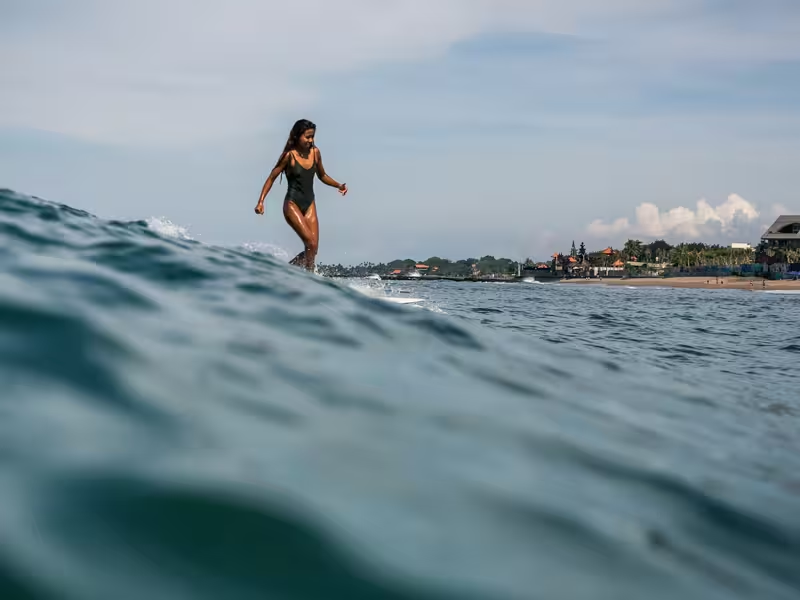
Surfing In Maldives
The Maldives is not the first destination most surfers think of. The Maldives is where honeymooners go. Where people with overwater villas and dolphin cruises and underwater restaurants go. Surfers go to Indonesia, to Portugal, to Hawaii.And yet the Maldives has some of the finest reef breaks in the Indian Ocean, a genuine surf season that delivers consistent swell for six months of the year, and crucially the ability to combine world-class waves with the kind of tropical island environment that no other major surf destination provides. Surfing a left-hand reef break with the Indian Ocean visible in every direction and nobody else in the water is a specific combination that the Maldives delivers more completely than most destinations that compete for the surf travel market.Maldives Surf SeasonThe surf season in the Maldives aligns with the southwest monsoon broadly May through October. This is also the wet season, which means more cloud cover and occasional rain, but the swell consistency and quality during these months is significantly higher than the dry season. The dry season from November through April produces occasional surf but the swells are less consistent and the waves generally smaller.June and July typically deliver the largest and most consistent swell. August and September maintain good consistency with slightly smaller wave size. October marks the transition out of the surf season but can deliver excellent days, particularly in the northern part of the swell window. May is the opening of the season less consistent than mid-season but with the advantage of fewer visiting surfers.The Surf BreaksNorth Male Atoll holds the most accessible surf breaks in the Maldives. The famous left-handers and right-handers near the central atolls Cokes, Chickens, Sultans, Lohis, and Pasta Point are within boat range of resorts and surf camps in the area.Cokes is the premier break of North Male Atoll a hollow, fast left-hander over a shallow reef that produces some of the best waves in the Maldives on a solid swell. It is not a beginner wave. The reef is shallow, the barrel is fast, and wipeouts are consequential. For experienced surfers, Cokes at its best is as good as the Indian Ocean gets in this region.Chickens is the more forgiving version a longer, more workable left-hander that produces excellent waves for intermediate to advanced surfers without the intensity of Cokes. It handles a wider range of swell sizes well.Sultans is a consistent right-hander with a longer ride than most Maldivian breaks. It handles large swell well and produces waves that allow extended surfing across the full face.Pasta Point is a world-class left-hander that has been associated with Dhoni Mighili resort for decades a consistent, hollow, fast wave that is exclusive to the adjacent resort guests on most days.Laamu Atoll in the south is where the most consistent and highest-quality surf in the Maldives is found for travelling surfers willing to make the longer transfer. The waves here are less crowded than North Male Atoll and the quality of the reef breaks particularly the left-handers accessible from Six Senses Laamu is exceptional.Six Senses Laamu runs a dedicated surf programme surf guides, equipment, daily forecasts, and boat access to multiple breaks across the atoll. The combination of luxury accommodation, a genuine wellness programme, and serious surf access is difficult to find at any other property in the Maldives.BreakAtollDirectionSkill LevelBest Swell SizeCrowd FactorCokesN MaleLeftAdvanced4-8ftHighChickensN MaleLeftIntermediate+3-6ftMediumSultansN MaleRightIntermediate4-7ftMediumPasta PointN MaleLeftAdvanced4-8ftExclusiveLaamu BreaksLaamuMixedAll levels3-8ftLowSurf Resorts and LiveaboardsSix Senses Laamu is the strongest surf resort in the Maldives for guests who want luxury accommodation alongside genuine surf access. The surf boat operates daily during the season and the guides know the local breaks with the intimacy of years of daily observation.Dhoni Mighili in North Male Atoll offers exclusive access to Pasta Point one of the most coveted waves in the Maldives for guests of the resort. The property is small and intimate, the surf access is exclusive, and the combination of the wave quality and the private island experience is unique in the Maldives surf market.Surf liveaboards are the most efficient way to access the maximum number of breaks across multiple atolls in a single trip. Several operators run surf-specific dhoni itineraries during the May through October season, moving between breaks across North and South Male Atoll and extending into Laamu Atoll and beyond for longer itineraries. The liveaboard format allows early access to each break before resort boats arrive, which makes a meaningful difference to the crowd situation at the most popular sites.Surf Season Swell ForecastMonthSwell QualityWave SizeWeatherCrowdsMayGood3-6ftStarting monsoonLowJun-JulPeak5-10ftWet seasonHighAug-SepExcellent4-8ftConsistentMediumOctGood3-7ftTransitionLowWhat Level Is NeededMost Maldivian surf breaks are reef breaks the waves break over coral rather than sand. This is important to understand before paddling out. Reef breaks are less forgiving than beach breaks on wipeouts the reef is close to the surface and falls can result in cuts and abrasions. Intermediate to advanced surf experience is recommended for most Maldivian surf sites.Complete beginners are not well served by reef break conditions. Surfers in the early stages of learning are better served by starting in destinations with beach breaks before attempting the Maldivian reef waves.Surf Accommodation OptionsTypeBest OptionPrice Range (Peak)CrowdsLuxury LevelSurf ResortSix Senses Laamu$2k-7k/nightLow5-starExclusiveDhoni Mighili$800-2k/nightNone4-starLiveaboardSurf dhoni charters$3k-6k/weekFirst access3-4 star
 Related Resort
Yoga in Maldives
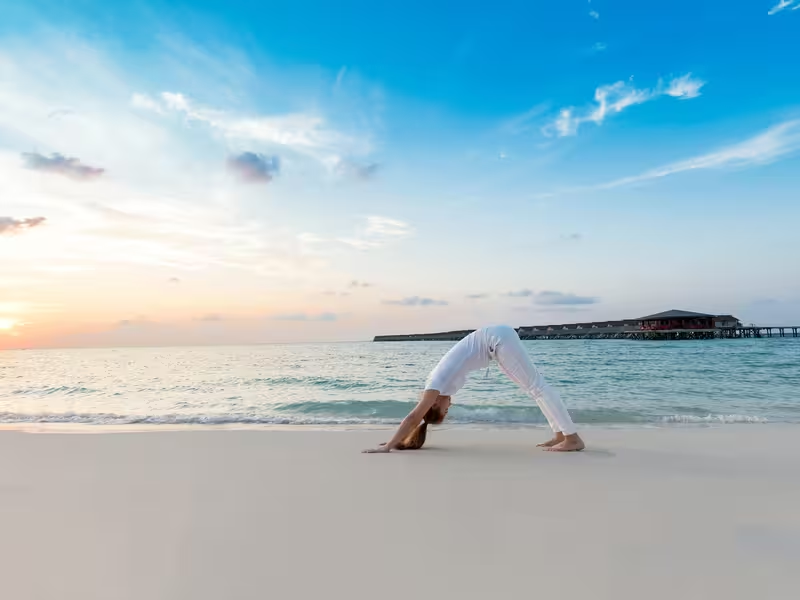
There's a moment that happens on the first morning.You walk out onto an open platform above the lagoon before the sun has fully cleared the horizon. The water below you is completely flat. The air is warm but not yet hot. The light coming across the Indian Ocean at that hour has a quality that doesn't exist anywhere else low, soft, golden, and completely without noise. You unroll your mat, find your position, and for the next hour the outside world simply doesn't exist.It sounds like something a resort brochure made up. It isn't. The Maldives genuinely produces these conditions every morning, and practising yoga inside them above the water, surrounded by open ocean, in air that smells like the sea does something to a practice that a studio back home cannot replicate no matter how good the instructor is.The setting, though, is only part of it. The yoga itself varies enormously across Maldivian resorts, and that gap matters if yoga is actually why you're going. Some properties offer one group class a week delivered by a part-time instructor who covers three other activities on the schedule. Others run structured daily programmes with multiple formats, resident teachers, visiting specialists, and a wellness philosophy that runs through every part of the guest experience. This guide tells you which is which and where to go if yoga is a priority rather than an afterthought.What to Expect from Yoga at Maldives ResortsMost full-service resorts in the Maldives include yoga somewhere in their activities calendar. The standard offering runs to one or two group classes per week usually morning Hatha or Vinyasa in an overwater pavilion or beachside open space, mixed level, delivered by a resident instructor whose primary job is to keep the class accessible to the widest possible range of guests.That's fine for travellers who want an occasional morning stretch alongside beach time and snorkelling. It's not enough for anyone who practises seriously or wants yoga to be the actual centrepiece of the trip.Wellness-oriented properties go considerably further. The best ones run daily classes across multiple formats Yin, Vinyasa, Pranayama, meditation, sound healing with a rotation of visiting teachers that prevents the repetition a single resident instructor inevitably produces by day four of a seven-night stay. At these resorts, yoga sits inside a broader programme rather than floating alongside it, and the difference in experience is immediate and obvious.Best Resorts for Yoga in the MaldivesSix Senses Laamu runs the strongest yoga programme of any resort in the Maldives, and it isn't particularly close. The resort offers daily classes across multiple formats and skill levels, from beginner-accessible morning flow sessions to more advanced Pranayama and meditation practices. The yoga pavilion is open-sided and positioned directly over the Laamu Atoll lagoon the physical environment here makes a genuine contribution to the practice rather than just providing a backdrop for photographs.What separates Six Senses Laamu from every other property is integration. Yoga here sits inside a coherent wellness programme that connects to nutrition, sleep, spa treatments, and even the resort's surf programme. Guests who want to build an actual recovery week not just attend classes in a nice setting find that Six Senses Laamu is designed specifically for that purpose.COMO Maalifushi delivers yoga through the COMO Shambhala movement methodology a structured programme that combines yoga and Pilates with the resort's therapeutic treatment offering. The instructors at COMO properties train specifically in the Shambhala approach, which gives the teaching a depth and consistency that generic resort yoga classes rarely achieve. If methodology matters to your practice, COMO Maalifushi is the most serious option in the Maldives.Soneva Fushi in Baa Atoll has built one of the most photographed yoga facilities in the world a floating platform above the Baa Atoll lagoon, accessible by kayak for early morning sessions. The platform sits entirely above the water, surrounded by the lagoon on all sides, with nothing between you and the horizon in every direction. It produces a yoga environment that genuinely has no equivalent anywhere. The experience of practising on open water as the sun comes up over Baa Atoll is something most guests describe as the single most memorable session of their lives.Anantara Kihavah in Baa Atoll positions morning yoga in a pavilion adjacent to the spa, with the lagoon visible throughout the session. The programme pairs movement in the morning with spa restoration in the afternoon a format that suits wellness-focused guests who want structure without rigidity. The proximity to Hanifaru Bay for manta ray snorkelling makes Anantara Kihavah a strong combined choice for guests who want both nature and wellness in the same trip.Waldorf Astoria Ithaafushi integrates yoga into a dedicated wellness programme within its spa complex. The class variety and instructor quality reflect the property's considerable investment in its wellness facilities, and the setting a large private island with exceptional water villa accommodation gives the whole experience a scale and polish that suits guests who want luxury and serious wellness in the same package.ResortAtollClass FrequencySignature FeatureBest ForSix Senses LaamuLaamuDaily, multiple formatsOverwater pavilion + surf integrationWellness immersionCOMO MaalifushiThaaDaily structuredShambhala methodologyHealth-focusedSoneva FushiBaaMultiple dailyFloating yoga platformUnique settingAnantara KihavahBaaMorning dailySpa+yoga integrationCouples wellnessYoga Retreats in the MaldivesSeveral resorts structure dedicated yoga retreat packages typically five to seven nights built around daily classes, spa treatments, nutritional guidance, and a specific villa category. These packages suit guests who want yoga as the primary reason for the trip rather than one activity among many.Six Senses Laamu runs the most developed retreat programme in the Maldives. Beyond the resident instruction, the resort periodically brings in visiting yoga teachers international specialists with deep backgrounds in specific traditions for week-long immersion programmes. These programmes attract guests who travel specifically for the visiting teacher rather than the resort itself, which is a meaningful distinction. The Six Senses Laamu website publishes its visiting teacher calendar in advance, which makes it possible to plan a trip around a specific instructor or tradition rather than booking and hoping for the best.For anyone whose practice is serious enough that the teacher matters as much as the setting, checking that calendar before booking is worth doing first.Yoga Retreat Package ComparisonDurationResortWhat's IncludedApprox. Cost (Peak USD)5 NightsSix Senses LaamuDaily yoga, spa, nutrition, villa$4,000-$8,000 pp7 NightsCOMO MaalifushiShambhala programme, meals, yoga$3,500-$7,000 pp3 NightsSoneva FushiFloating platform, garden dining$2,500-$5,000 pp
 Related Resort
Fishing In Maldives
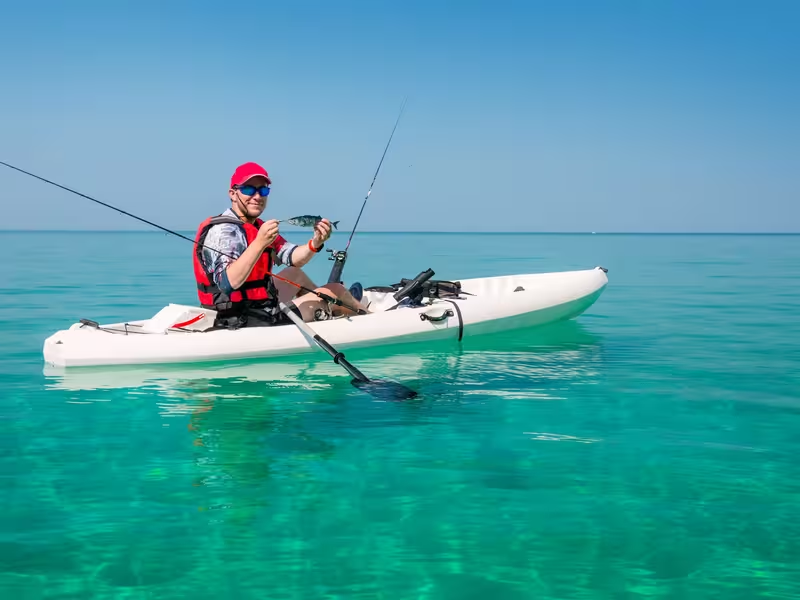
Ideal mix of completely clear waters, white sandy sea shores and an enormous assortment of marine life make the Maldives quite possibly the most fishing objective on the planet. Maldives experience is infrequently managed without fishing, and numerous a fisherman tries to contract a boat with a fantasy to get a major fish that ought to in a real sense move you! Maybe you've heard a great deal about this sea shore objective, yet have no idea about what fishing looks like and what strategies for fishing are generally famous. Maldives has probably the most extravagant fishing grounds on the planet and you don't need to wander a long way from the shore to break fishing records. Awesome prize sailfish and marlin along with shark, GT, goliath barracuda, rainbow-sprinter and wahoo make Maldives an energizing fishing objective for the accomplished angler and beginner the same. The Maldives comprise of a chain of 26 atolls, comprised of almost 1,200 coral islands, which stretch from north to south in the Indian Ocean, 400km away from Sri Lanka – the closest territory. The tremendous landscape and elite lodgings make the islands an asylum for holidaymakers, however a critical piece of the allure is the magnificent fishing spots which are specked around the incalculable islands, tidal ponds and atolls. Fishing is quite possibly the most mainstream sporting exercises on the islands, which are home to more than 1,100 types of fish going from fish to barracuda, reef and squirrel fish. Regardless of whether you're fishing from land or by boat, there's an entire scope of extraordinary fish to be gotten. An assortment of contract boats and fishing outings consider singular fitting of fishing programs.