Where to Stay in Maldives
The Maldives is an archipelago of 26 atolls and over 1,000 coral islands in the Indian Ocean, southwest of Sri Lanka. Of those islands, approximately 178 are developed as resorts — each one a private island with its own character, facilities, and price point. No other destination on earth offers quite this model of hospitality: you arrive by speedboat or seaplane, step off onto white sand, and the island is yours.
The challenge - and the reason most first-time visitors spend weeks researching before booking - is choosing from 178 options when they all, to some degree, look the same in photographs. Turquoise lagoon. Overwater villa. White beach. The photographs do not tell you that one resort has a house reef worth an hour of snorkelling and the next has barely any coral. They do not tell you that the speedboat transfer at one resort is 20 minutes and at another it is 90. They do not tell you whether the food is worth eating or whether the all-inclusive actually covers what you think it covers.
This guide is designed to give you the context you need to make that choice well - covering resort types, atoll locations, transfer methods, villa categories, meal plans, and the key questions to ask before you book.
Types of Accommodation in the Maldives
The Maldives offers several distinct accommodation types, each suited to a different type of traveller and budget.
Private Island Resorts
The classic Maldives experience. Each resort occupies its own private island, which means no day trippers, no outside visitors, and complete privacy within the island boundary. Resorts range from 20-villa boutique properties to large-scale resorts with 150+ rooms. The vast majority of international tourists stay in private island resorts. Prices range from around USD 300 per night at budget-end properties to USD 5,000+ at ultra-luxury estates.
Local Island Guesthouses
Since 2009, tourists have been permitted to stay on inhabited local islands - a policy change that opened up genuine budget travel in the Maldives for the first time. Local island guesthouses on islands such as Maafushi, Thulusdhoo, Ukulhas, and Rasdhoo offer rooms from USD 60–200 per night, with access to bikini beaches and local restaurants. The trade-off is that inhabited islands are more conservative, beaches are shared, and the pristine private-island atmosphere is replaced by the more varied texture of real Maldivian community life. For adventurous independent travellers on tighter budgets, this is a genuinely good option.
Liveaboards
Liveaboard dive boats allow guests to sleep, eat, and dive from the same vessel, moving between dive sites across multiple atolls during a single trip. The Maldives has one of the best liveaboard scenes in the world, with routes covering the northern, central, and southern atolls. Liveaboards are for divers - this is not a comfortable holiday format for non-divers - but for those who are, a Maldives liveaboard is among the best diving experiences available anywhere.
Understanding Maldives Atolls & Transfer Times
One of the most important - and most misunderstood - aspects of booking a Maldives resort is understanding where it is. The Maldives stretches over 800 kilometres from north to south. A resort in Raa Atoll and a resort in North Male Atoll are both 'in the Maldives', but one is 40 minutes by speedboat from the airport and the other is 40 minutes by seaplane. That difference has significant implications for cost, logistics, and the type of trip you will have.
North Male Atoll – Speedboat Resorts (20–45 minutes)
The most accessible and most densely populated resort atoll in the Maldives. Speedboat transfer from Velana International Airport takes 20–45 minutes depending on the resort. No seaplane required, no overnight stay in Male needed for late-night arrivals. The convenience comes at a cost - North Male Atoll is the most competitive and most visited atoll, meaning house reefs and dive sites are more trafficked than in remote atolls. Still home to some excellent resorts, including Baros, Kagi Maldives, and VARU by Atmosphere.
South Male Atoll – Speedboat Resorts (30–60 minutes)
Accessible by speedboat from the airport, South Male Atoll offers a slightly more remote feel than North Male while still avoiding seaplane logistics. Several well-regarded resorts are located here, and the atoll's channel diving is considered among the best in the accessible atolls.
Baa Atoll – Seaplane Resorts (~25 minutes)
A UNESCO Biosphere Reserve and home to Hanifaru Bay - the world's most reliable manta ray aggregation site. Seaplane transfer of approximately 25 minutes. The marine environment here is exceptional, with less resort density than the central atolls. Home to The Nautilus Maldives, Seaside Finolhu, and several other prominent resorts. Seaplane logistics mean late-night arrivals require a Male overnight, which adds cost and planning complexity.
Raa Atoll – Seaplane Resorts (~40 minutes)
Northern atoll with excellent marine diversity and some of the Maldives' most notable luxury resorts, including InterContinental Maldives Maamunagau. Calm lagoons and good house reef quality. Seaplane transfer of approximately 40 minutes from Male.
Ari Atoll – Seaplane or Domestic Flight (~25–35 minutes seaplane)
One of the most popular resort atolls in the Maldives due to its concentration of whale sharks and manta rays, strong house reefs, and the availability of both seaplane and domestic flight access (via Maamigili Airport in South Ari). Home to a wide range of resorts across all price points.
Dhaalu Atoll - Seaplane Resorts (~35 minutes)
Central Maldives atoll with less resort density and a generally quieter, more secluded atmosphere. Good house reef quality and less-trafficked dive sites. Home to Baglioni Resort Maldives. Seaplane transfer of approximately 35 minutes from Male.
Gaafu Alifu Atoll – Seaplane Resorts (~55 minutes)
Southern Maldives atoll offering genuine remoteness and exceptional marine environments. Seaplane transfer of approximately 55 minutes. Home to Raffles Maldives Meradhoo. The longer transfer time and higher cost of reaching this atoll means it is best suited to travellers specifically seeking its superior dive sites and seclusion.
Villa Types in Maldives Resorts
Understanding villa categories is essential for booking well. The same resort can offer a very different experience depending on which category you choose. The main types, from most common to most exclusive, are:
Beach Villa
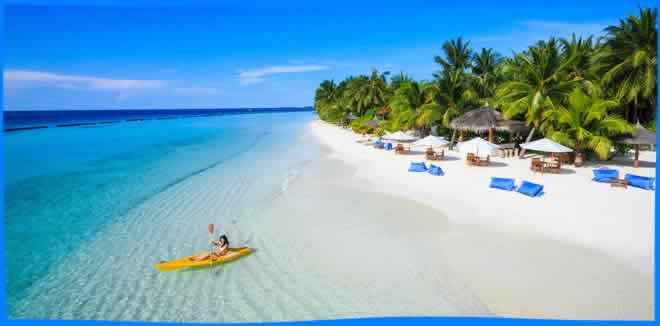
The entry-level category at most resorts. Direct access to the beach, furnished outdoor terrace, and typically good views of the lagoon. The best beach villas at well-located resorts can be more enjoyable than overwater villas at poorly located ones - the beach matters as much as the structure.
Beach Pool Villa
A beach villa with a private plunge pool on the terrace. The most popular category at mid-to-upper-tier resorts. The pool gives privacy and luxury without requiring an overwater location. A strong choice for guests who are not specifically drawn to the overwater experience.
Overwater Villa
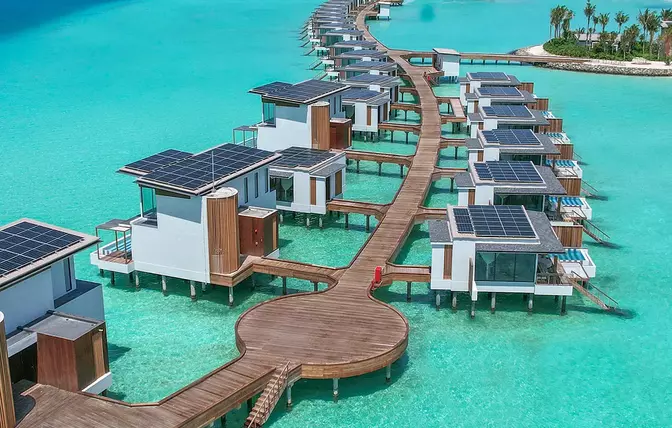
Built on stilts over the lagoon, with direct water access from a private deck. The quintessential Maldives accommodation. Quality varies significantly - the best overwater villas have glass floor panels, outstanding lagoon views, and strong coral directly below the steps. Check the specific lagoon quality of the resort you are considering.
Overwater Pool Villa
An overwater villa with a private infinity pool on the deck. The combination of pool and lagoon access is the most sought-after configuration in the Maldives. These are typically the resort's premium category and are priced accordingly.
Two-Bedroom Residence / Suite
The largest accommodation category at most resorts. Suited to families, two couples travelling together, or guests celebrating a special occasion. Usually includes butler service, expanded outdoor space, and all the amenities of the pool villa category at larger scale.
Meal Plans & All-Inclusive Options
Meal plans are one of the most important financial decisions in a Maldives booking. Because resorts are private islands, dining options outside the resort are minimal or non-existent. Food and drink costs can escalate very quickly on a pay-as-you-go basis - a family of four spending a week at an average five-star resort without any meal plan can easily spend USD 3,000–5,000 on food and drinks alone.
Bed & Breakfast (BB)
Room rate includes breakfast only. Best for guests who want maximum flexibility for dining, but be aware that lunch and dinner will be full resort prices. Suitable for shorter stays or guests who plan to spend most days on excursions where meals are included.
Half Board (HB)
Breakfast and dinner included. The most common choice for Maldives holidays. Gives predictability for main meals while leaving flexibility for lunch and drinks. Most guests find this a good balance between cost control and choice.
Full Board (FB)
Breakfast, lunch, and dinner included. Good value for longer stays where guests plan to eat most meals at the resort. Still does not include beverages, which can add significantly to daily costs at a five-star property.
All-Inclusive (AI)
Covers all meals, beverages (including alcoholic drinks), and in some cases activities and spa treatments. The breadth of what is 'included' varies significantly between resorts - always read the specifics carefully. Some all-inclusive plans are genuinely comprehensive (like the VARU Plan at VARU by Atmosphere); others are more limited. When an all-inclusive plan is well-structured, it is typically the best value option for a week-long Maldives holiday.
Transfer Types: Speedboat vs Seaplane vs Domestic Flight
Speedboat Transfer
Transfers by speedboat from Velana International Airport take 20–90 minutes depending on the resort location. Speedboat transfers are available at any hour, including for late-night arrivals - making them significantly more flexible than seaplanes. Cost is typically USD 100–250 per person return. The boat journey across the lagoon is scenic and relatively comfortable, though passengers can get wet in rougher conditions.
Seaplane Transfer
Seaplanes operate during daylight hours only - typically 6am to 5:30pm. Guests arriving on late-evening or overnight flights must overnight in Male before taking the seaplane the following morning. Transfer time is 20–60 minutes depending on the destination atoll. The seaplane journey is itself a highlight for many visitors - flying low over hundreds of coral atolls at sunrise or sunset is a genuinely spectacular experience. Cost is typically USD 300–600 per person return. Seaplane-access resorts tend to be in more remote, less-visited atolls with better marine environments.
Domestic Flight + Speedboat
Some resorts in more distant atolls (particularly Ari Atoll, Laamu Atoll, and Addu Atoll) are accessible via domestic flights from Velana International Airport to regional airports, followed by a short speedboat transfer. Domestic flights operate throughout the day and are not dependent on daylight in the same way seaplanes are. Flight time is typically 20–45 minutes. This option combines the accessibility of flights with lower per-person cost compared to seaplanes, and is worth considering for resorts where it is available.
How to Choose the Right Maldives Resort
With 178+ resorts to choose from, the most useful approach is to work from your priorities outward rather than from a general 'best resorts' list. The right resort for a couple celebrating their honeymoon is different from the right resort for a family with young children, which is different again from the right resort for a dedicated diver. Here are the key questions to answer before you start looking:
What is your transfer preference?
If you are arriving late at night or do not want the complexity of overnight Male stays, choose a speedboat-access resort in North or South Male Atoll. If the marine environment and seclusion matter more than convenience, a seaplane-access resort in Baa, Raa, Dhaalu, or a southern atoll will reward the effort.
How important is the marine environment?
If snorkelling and diving are central to your trip, research the house reef quality of specific resorts before booking. Some resorts have exceptional reefs accessible directly from the beach or villa steps; others have negligible coral. This information is rarely highlighted in resort marketing but is easily found in diver reviews.
What type of traveller are you?
Couples and honeymooners generally prioritise overwater pool villas, romance, and excellent dining. Families need Kids Club, family-sized accommodation, and calm, shallow lagoons. Active travellers want a strong water sports and diving programme. Wellness-focused travellers should look at resorts like Kagi Maldives with genuinely comprehensive spa programmes.
What is your honest budget?
Be honest about total cost, not just the room rate. Factor in transfers (USD 200–600 per person return), meal plans (potentially USD 200–400 per person per day on a good all-inclusive plan), and add-on activities. A mid-range resort with a comprehensive all-inclusive plan often delivers better total value than a luxury resort booked on a bed-and-breakfast rate.
How long are you staying?
Three nights is the practical minimum to feel like you have actually arrived. Five to seven nights is the sweet spot for most travellers - enough time to decompress, explore the marine environment properly, and not feel rushed. Ten nights or more makes sense for wellness-focused stays or trips combining multiple atolls.
Recommended Resorts by Traveller Type
Best All-Inclusive Resorts
VARU by Atmosphere (North Male Atoll) and Kagi Maldives Spa Island (North Male Atoll) are among the strongest all-inclusive options in the accessible atolls, with comprehensive plans that genuinely justify the all-in pricing. Both offer speedboat access, making them practical choices for first-time visitors.
Best Luxury Resorts
Raffles Maldives Meradhoo (Gaafu Alifu Atoll), The Nautilus Maldives (Baa Atoll), and Baglioni Resort Maldives (Dhaalu Atoll) sit at the top of the ultra-luxury segment with distinct identities — Raffles for exclusivity and diving, The Nautilus for bespoke service, and Baglioni for Italian culinary culture. InterContinental Maldives Maamunagau (Raa Atoll) offers a strong five-star product at a slightly more accessible price.
Best Family Resorts
InterContinental Maldives Maamunagau, Seaside Finolhu (Baa Atoll), and Kagi Maldives all offer genuine family infrastructure - dedicated Kids Clubs, family villa categories, and calm lagoon environments suitable for young children. For families with older children interested in diving, resorts in Ari Atoll or near Hanifaru Bay in Baa Atoll offer exceptional marine access.
Best for Couples & Honeymoons
The Nautilus Maldives, Raffles Maldives Meradhoo, and VARU by Atmosphere all consistently perform well for honeymoon guests. The Nautilus offers the most private and bespoke experience, Raffles the most dramatic scenery and dining; VARU the best value-to-luxury ratio among the three. Kagi Maldives Spa Island is a strong wellness-honeymoon option.
Best for Diving & Snorkelling
Seaside Finolhu and The Nautilus Maldives both benefit from the exceptional marine environment of Baa Atoll and proximity to Hanifaru Bay. Raffles Maldives Meradhoo in Gaafu Alifu Atoll offers arguably the finest and least-crowded diving of any luxury resort in the country. Resorts in Ari Atoll offer reliable whale shark and manta ray encounters year-round.
Practical Tips for Booking a Maldives Resort
•Book early for peak season (December to April). The best villas at the most popular resorts sell out months in advance during the dry season. Flexible dates and advance planning are the most effective tools for securing the villa category you want at reasonable prices.
•Check the specific lagoon of your villa category, not just the resort's general lagoon. Some resorts have excellent overwater villa lagoons but mediocre beach villa lagoons, or vice versa. Dive review sites and travel forums provide the most honest assessments of house reef quality.
•Read the all-inclusive inclusions in full before booking. 'All-inclusive' means something different at every resort. Some plans include everything from water sports to spa treatments; others cover only meals and non-alcoholic drinks.
•Account for seaplane logistics if your resort requires a seaplane transfer. If your flight lands after 3pm, you may need to budget for a Male overnight, which adds USD 150–300 to your trip cost and requires advance planning.
•Consider the direction of your overwater villa. Sunrise-facing villas are spectacular for early risers who want morning light over the water. Sunset-facing villas are better for guests who value the evening atmosphere. Most resorts offer both orientations - it is worth specifying when booking.
•Reef-safe sunscreen is important and required by some resorts. Chemical sunscreens (oxybenzone-based) damage coral reefs. Mineral sunscreens (zinc oxide or titanium dioxide) are the alternative. Bring your own as resort shops often charge significantly above normal retail prices.
•Currency and tipping: most transactions at Maldives resorts are charged to your villa account in USD. Tipping is appreciated but not obligatory. A discretionary amount added to your bill at checkout, or small cash tips to specific staff who have made a difference, is the most common approach.
Final Thoughts
The Maldives is one of those destinations that lives up to its reputation when you choose the right resort for the right reasons. The photographs are accurate - it really does look like that. But the experience of being there depends enormously on the details: the reef below your villa steps, the quality of the dinner, the warmth of the staff, the size of the lagoon, and whether or not any of that feels worth the journey.
Use this guide as a starting point, then go deeper on the specific resorts and atolls that match your priorities. The Maldives Times resort pages cover individual properties in detail - villa by villa, restaurant by restaurant - so that by the time you book, you are choosing with confidence rather than hoping for the best.
Compare Live Rates & Exclusive Deals
Compare Live Rates & Exclusive Deals
Featured Hotels & Guides in this Collection (1)